Quick Facts
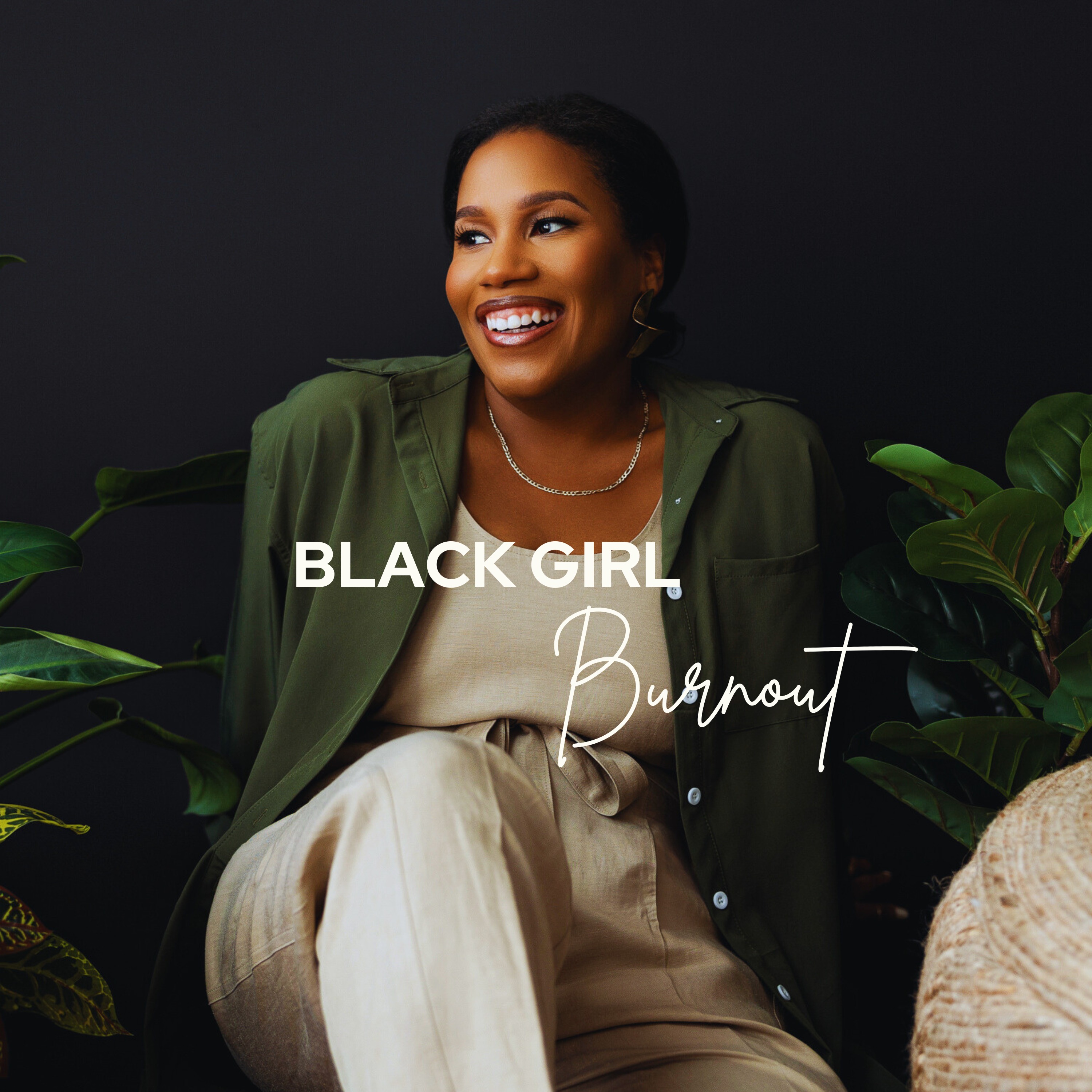
Black Girl Burnout is a podcast about burnout, ambition, care, and what it actually takes to build a life that feels good to live—not just impressive from the outside. Hosted by Kelley Bonner, the show explores how burnout takes hold, why ambition doesn’t need to be abandoned but redesigned, and how joy, rest, and gentleness can coexist with meaningful work and forward movement.
Through reflection, practical insight, and carefully chosen conversations, Black Girl Burnout offers both grounding and direction, helping listeners feel seen and take action toward lives that are sustainable, intentional, and their own.
Episodes
Latest Episode
October 21, 2026 · 31m
After seeing a viral clip of two Black women saying there aren’t many safe spaces for ambitious Black women, Kelley shares why she doesn’t disagree, and why her relationship to that truth has changed. In this solo episode, she walks through the five truths she’s cultivated over the last five years to create safety for herself instead of waiting for the world to provide it, and what it feels like to finally exhale. Key Takeaways The world can’t guarantee safety, so waiting for it is a losing game. Kelley isn’t disputing that Black women face disproportionate harm, she’s choosing to create safety rather than wait for it. Other people’s opinions are data, not instructions. When you trust yourself, reactions can inform you without defining you or running your decisions. Build the community you need, not the one you imagined. Stop asking one person to be everything, and start assigning people to roles in your life. Protecting your peace requires actually letting yourself experience it. Boundaries shouldn’t become a fortress, and you can be both vulnerable and discerning. Episode Highlights & Timestamps 03:00 Truth #1 : Other people’s opinions are data, not instructions 06:00 Truth #2 : Everyone’s life isn’t a party while yours is a tragedy 11:00 Truth #3 : Build the community you need, not the one you imagined 16:00 Truth #4: Creating safety requires sacrifice 22:00 Truth #5 : Protecting your peace requires vulnerability Gentle Invitation Sit with this question this week: what are you waiting for the world to give you instead of creating for yourself? Start small. Name one role you can assign to someone in your life, or one place where a little vulnerability might let someone show up for you. Support the Show If you'd like to make a one-time gift in honor of this milestone and support the continued work of Black Girl Burnout, you can donate through Ko-fi at ko-fi.com/blackgirlburnout . Like, follow, and subscribe across all platforms. Find us @blackgirlburnout. Subscribe to our newsletter at . Watch on YouTube. Drop a review, your words make a real difference, and they warm Kelley's whole heart every single time. Stay in Touch Join our Substack family for weekly reflections, tools, and behind-the-scenes notes from Kelley. Become a paid subscriber ($8/month) for exclusive resources and monthly workshops. Our Sponsors Savvy Ladies Free Financial Helpline: Advertising Inquiries: RedCircle | Privacy & Opt-Out: RedCircle Advertising Inquiries: Privacy & Opt-Out:
More Episodes
Oct 14, 2026 · 30m
With so much happening in the world, Kelley offers a moment of Zen: a conversation about protecting your nervous system, holding onto your joy, and not losing your focus in chaotic times. She makes the case that rest, regulation, and joy aren’t luxuries, they’re necessities and forms of resistance, and she shares three practical tools for bringing your body back to calm, plus a guided meditation to close out the episode.Key TakeawaysRest, regulation, and joy aren’t luxuries, they’re necessities and forms of resistance. Choosing them isn’t a cop-out, it’s how we thrive and survive.Overworking is a trauma response. You can’t hustle your way out of an unsafe world or a shaky economy, and feeling exhausted or anxious doesn’t mean something is wrong with you, it’s your nervous system doing what it was designed to do.Three quick practices can bring your body back to regulation: breathwork (inhale for four, hold for four, exhale for six), the 5-4-3-2-1 senses exercise, and a body scan.Build a joy practice. List five joy practices that are free or inexpensive and take five minutes or less, then choose one to do daily as your act of protest.Episode Highlights & Timestamps03:00 Why overworking is a trauma response, and why you can’t hustle your way out08:00 Rest as resistance: practical ways to rest, like shutting your laptop at 5 p.m. and logging off12:00 How to regulate your nervous system: breathwork, 5-4-3-2-1, and a body scan20:00 Joy as resistance, and why you need five joy practices you can do in five minutes or less27:00 Guided meditation to reclaim rest and regulation (2-3 minutes of calm)Gentle InvitationBefore this episode ends, list five joy practices that take five minutes or less, ones that are free or inexpensive and easy to reach. Then choose one and do it daily this week, small and consistent, as your act of protest.Support the ShowIf you'd like to make a one-time gift in honor of this milestone and support the continued work of Black Girl Burnout, you can donate through Ko-fi at ko-fi.com/blackgirlburnout.Like, follow, and subscribe across all platforms. Find us @blackgirlburnout.Subscribe to our newsletter at blackgirlburnout.com. Watch on YouTube. Drop a review, your words make a real difference, and they warm Kelley's whole heart every single time.Stay in TouchJoin our Substack family for weekly reflections, tools, and behind-the-scenes notes from Kelley.Become a paid subscriber ($8/month) for exclusive resources and monthly workshops.Our SponsorsSavvy Ladies Free Financial Helpline: https://www.savvyladies.org/Advertising Inquiries: RedCircle | Privacy & Opt-Out: RedCircleAdvertising Inquiries: https://redcircle.com/brandsPrivacy & Opt-Out: https://redcircle.com/privacy
Oct 7, 2026 · 27m
With so much feeling heavy right now, Kelley makes the case for doubling down on whimsy, not despite how hard things are, but because of it. She shares a three-step framework for getting delight back into your life, why whimsy doesn't require money or a vacation, and why joy and grief can coexist without one canceling out the other.Key TakeawaysWhimsy isn't frivolous, it's exactly what we need when everything feels hard. Waiting for perfect conditions to feel delight means waiting forever.The three-step whimsy framework: remember what delighted you as a kid, experiment without judging whether it "fits" your life, then find and pursue the delight by actually putting it back in.Whimsy doesn't require money or a complete life overhaul. Try asking, "How can I make this 10% more delightful?" instead.Joy and grief can coexist. Being joyful doesn't mean you don't understand what's happening in the world, it means you're choosing something different anyway.Episode Highlights & Timestamps08:00 The three-step framework for bringing whimsy back: remember, experiment, find and pursue delight14:00 The "10% more delightful" challenge, and why you should stop saving things for a special occasion17:00 Whimsy without spending: why delight doesn't require money20:00 Why joy and grief can coexist, and why survival can't be the full measure of your lifeGentle InvitationThis week, name one thing you loved in the past that you haven't done in a long time. Try it, and do it with maximum delight, for no better reason than it will make you smile.Support the ShowIf you'd like to make a one-time gift in honor of this milestone and support the continued work of Black Girl Burnout, you can donate through Ko-fi at ko-fi.com/blackgirlburnout.Like, follow, and subscribe across all platforms. Find us @blackgirlburnout.Subscribe to our newsletter at blackgirlburnout.com. Watch on YouTube. Drop a review, your words make a real difference, and they warm Kelley's whole heart every single time.Stay in TouchJoin our Substack family for weekly reflections, tools, and behind-the-scenes notes from Kelley.Become a paid subscriber ($8/month) for exclusive resources and monthly workshops.Our SponsorsSavvy Ladies Free Financial Helpline: https://www.savvyladies.org/Advertising Inquiries: RedCircle | Privacy & Opt-Out: RedCircleAdvertising Inquiries: https://redcircle.com/brandsPrivacy & Opt-Out: https://redcircle.com/privacy
Sep 30, 2026 · 24m
After a few heavier episodes, Kelley comes in with a celebration of fall, her favorite season. Working off the quote "Autumn shows us how beautiful it is to let things go," she walks through her personal Fall Inventory, five gentle questions about what to release and what to welcome in as the season turns, with zero self-judgment required.Key TakeawaysFall is an invitation to let go, not another season to optimize or berate yourself. Reflection can be gentle instead of punishing.Comfort and coziness aren't selfish or lazy, they're the pathway to safety. And safety isn't a one-time act, it's a ritual you repeat.The Fall Inventory is five questions: what are you letting go of, what are you leaning into, what keeps you cozy, what keeps you safe, and what keeps you optimistic.Optimism is a natural byproduct of safety and comfort, not something you force or tie to hitting a specific goal or number.Episode Highlights & Timestamps01:00 The quote that inspired the episode, "Autumn shows us how beautiful it is to let things go"03:00 What are you letting go of this fall? (Kelley lets go of obsessively tracking goals and numbers)06:00 What are you leaning into? (Prioritizing coziness and a slower pace)14:00 What's keeping you safe? Why safety is a ritual, not a one-time act9:00 What's keeping you optimistic, and why it's a natural byproduct of safety and comfortGentle InvitationPick one or two of the five questions, what to let go of, what to lean into, what keeps you cozy, what keeps you safe, what keeps you optimistic, and gently reflect. No self-judgment required, just curiosity.Support the ShowIf you'd like to make a one-time gift in honor of this milestone and support the continued work of Black Girl Burnout, you can donate through Ko-fi at ko-fi.com/blackgirlburnout.Like, follow, and subscribe across all platforms. Find us @blackgirlburnout.Subscribe to our newsletter at blackgirlburnout.com. Watch on YouTube. Drop a review, your words make a real difference, and they warm Kelley's whole heart every single time.Stay in TouchJoin our Substack family for weekly reflections, tools, and behind-the-scenes notes from Kelley.Become a paid subscriber ($8/month) for exclusive resources and monthly workshops.Our SponsorsSavvy Ladies Free Financial Helpline: https://www.savvyladies.org/Advertising Inquiries: RedCircle | Privacy & Opt-Out: RedCircleAdvertising Inquiries: https://redcircle.com/brandsPrivacy & Opt-Out: https://redcircle.com/privacy
Sep 23, 2026 · 21m
Kelley tells the story of a surgery that went wrong, and the email from her job that made her realize she'd been doing her life wrong: "So when are you coming back?" In this solo episode, she unpacks what self-abandonment gave her, what it cost her, and how it doesn't just harm you individually, it changes how we relate to each other too. She closes with a three-step practice for staying open instead of closing off.Key TakeawaysSelf-abandonment can work for a while, it makes you look dependable, gets you opportunities, even more money. But the bill always comes due, sometimes as burnout, sometimes as a health crisis.Ambition isn't the problem. The problem is leaving yourself behind while chasing it.Self-abandonment doesn't just cost you individually, it costs community too. Depleted, distrustful work environments teach us to be suspicious of each other, even other Black women who genuinely like each other.When jealousy or comparison shows up, get curious instead of combative. Ask what you actually want, and how you can move differently, not how to take it from someone else.Episode Highlights & Timestamps00:00 The surgery that went wrong, and the email that changed everything, "So when are you coming back?"04:00 What self-abandonment actually looked like day to day09:00 What self-abandonment cost Kelley, individually, health-wise, and long-term11:00 How depleted work environments teach Black women to distrust each other14:00 A three-step practice for staying open: sit with it, get curious, ask "how can I get what they got?"Gentle InvitationThis week, notice one place you might be abandoning yourself for a short-term win.Ask yourself: how can I keep my hand open without handing myself over?Support the ShowIf you'd like to make a one-time gift in honor of this milestone and support the continued work of Black Girl Burnout, you can donate through Ko-fi at ko-fi.com/blackgirlburnout.Like, follow, and subscribe across all platforms. Find us @blackgirlburnout.Subscribe to our newsletter at blackgirlburnout.com. Watch on YouTube. Drop a review, your words make a real difference, and they warm Kelley's whole heart every single time.Stay in TouchJoin our Substack family for weekly reflections, tools, and behind-the-scenes notes from Kelley.Become a paid subscriber ($8/month) for exclusive resources and monthly workshops.Our SponsorsSavvy Ladies Free Financial Helpline: https://www.savvyladies.org/Advertising Inquiries: RedCircle | Privacy & Opt-Out: RedCircleAdvertising Inquiries: https://redcircle.com/brandsPrivacy & Opt-Out: https://redcircle.com/privacy
Sep 16, 2026 · 43m
Kelley is doing Hot Takes today. In this solo episode, she breaks down three money myths circulating as the economy gets shakier: the belief that you need more income streams, that entrepreneurship is an automatic escape from a bad job, and that every hobby needs to become a hustle, and offers a grounded, researched alternative to the panic.Key TakeawaysMyth: you need more ways to make money. Truth: go deeper before you go broader. Social media isn't a reliable revenue stream, and deepening the skills and relationships you already have often pays off more than chasing seven new income streams.Myth: entrepreneurship is an escape hatch from a hard job. Truth: it's a different kind of stress, not a lesser one. It requires financial runway, high tolerance for uncertainty, and a level of discipline most people underestimate.Myth: everything valuable in your life needs to make money. Truth: hobbies don't need customers. Protect at least one thing in your life that exists purely for joy, not revenue.Relationships over reach. Ten people who trust your work and are willing to pay you will do more for your financial security than a million casual followers.Episode Highlights & Timestamps02:00 Myth #1: You need more ways to make money, and why social media isn't a reliable income source14:00 How to vet anyone selling you a "how to make money" program (the receipts test)24:00 Myth #2: Entrepreneurship is an automatic escape hatch from a bad job34:00 Myth #3: Don't monetize your hobbies, protecting the things that are just for joy39:00 Relationships over reach: the story of rebuilding her business after losing a year of work in three daysGentle InvitationThis week, resist the urge to add. Instead, pick one thing to deepen, one relationship, one skill, one income stream you already have. Ask yourself: am I making this decision from strategy, or from panic?Support the ShowIf you'd like to make a one-time gift in honor of this milestone and support the continued work of Black Girl Burnout, you can donate through Ko-fi at ko-fi.com/blackgirlburnout.Like, follow, and subscribe across all platforms. Find us @blackgirlburnout.Subscribe to our newsletter at blackgirlburnout.com. Watch on YouTube. Drop a review, your words make a real difference, and they warm Kelley's whole heart every single time.Stay in TouchJoin our Substack family for weekly reflections, tools, and behind-the-scenes notes from Kelley.Become a paid subscriber ($8/month) for exclusive resources and monthly workshops.Our SponsorsSavvy Ladies Free Financial Helpline: https://www.savvyladies.org/Advertising Inquiries: RedCircle | Privacy & Opt-Out: RedCircleAdvertising Inquiries: https://redcircle.com/brandsPrivacy & Opt-Out: https://redcircle.com/privacy
Sep 9, 2026 · 25m
Kelley names three wars she believes so many Black women are fighting right now, wars we've been mislabeling as something else entirely. In this solo episode, she unpacks the war with ourselves (that we call self-improvement), the war with our community (that we call accountability), and the war with the world (that we call activism), and makes the case for stepping out of all three and choosing peace instead.Key TakeawaysThe war with yourself often gets mislabeled as self-improvement. Urgency, self-punishment, and arbitrary deadlines aren't growth, they're just a fight with yourself in disguise.The war with community often gets mislabeled as accountability. There's a real difference between holding someone accountable and piling on. Call people in before you cut them off, and hold boundaries with love, not cruelty.The war with the world often gets mislabeled as activism. Anger alone isn't activism. Real change comes from being steady and grounded, not embattled.You can't fight three wars at once and survive it. Noticing which battle you're actually in is the first step to choosing peace instead.Episode Highlights & Timestamps03:00 The first war: mistaking self-punishment for self-improvement07:00 The second war: when accountability turns into pile-on culture and cruelty14:00 Calling people in instead of cutting them off, and holding boundaries with love16:00 The third war: confusing anger with activism18:00 Three questions to ask yourself before you go to warGentle InvitationThis week, notice which war you're in, with yourself, with your community, or with the world. Ask yourself: is this actually a battle I need to be in, or one I wandered into? You don't have to win it today. Just notice it's there.Support the ShowIf you'd like to make a one-time gift in honor of this milestone and support the continued work of Black Girl Burnout, you can donate through Ko-fi at ko-fi.com/blackgirlburnout.Like, follow, and subscribe across all platforms. Find us @blackgirlburnout.Subscribe to our newsletter at blackgirlburnout.com. Watch on YouTube. Drop a review, your words make a real difference, and they warm Kelley's whole heart every single time.Stay in TouchJoin our Substack family for weekly reflections, tools, and behind-the-scenes notes from Kelley.Become a paid subscriber ($8/month) for exclusive resources and monthly workshops.Our SponsorsSavvy Ladies Free Financial Helpline: https://www.savvyladies.org/Advertising Inquiries: RedCircle | Privacy & Opt-Out: RedCircleAdvertising Inquiries: https://redcircle.com/brandsPrivacy & Opt-Out: https://redcircle.com/privacy
Sep 2, 2026 · 26m
It's September, and Kelley wants you to pause before you "lock in." This solo episode challenges lock-in culture, the cultural pressure to suddenly get disciplined, finish the year strong, and fix your whole life in three months. Kelley shares her own cautionary tale of what years of pushing through cost her health, then walks through a gentler four-step framework for having real goals without declaring war on yourself.Key TakeawaysLock-in syndrome sounds motivating, but it usually runs on shame, the assumption that you're behind, undisciplined, or broken and need to be fixed by December 31st.September 1st isn't magic. There's nothing wrong with ambition, but arbitrary deadlines and 75-day challenges often create false urgency instead of real progress.Sometimes the most honest answer isn't to lock in harder, it's to ask whether you even need to optimize right now, or whether you just need to rest.The Gentle Lock-In Framework has four steps: check in, use discernment, choose, and gently commit.Episode Highlights & Timestamps02:00 What lock-in syndrome is, and the real cost of ignoring how you actually feel05:00 Kelley's own cautionary tale: what years of "locking in" cost her health12:00 Do you even need to optimize? Toxic self-care vs. toxic self-improvement16:00 Redefining "locking in": the four-step gentle framework19:00 What Kelley's own lock-in looks like this season (a "75 extra soft")Gentle InvitationBefore you set any goals this month, stop and ask yourself: how am I actually doing? Not what you should be doing, not what everyone else is doing, but what's actually true in your body, your mind, and your spirit right now.Choose one thing, a few things, or nothing at all. And whatever you choose, commit to it gently.Support the ShowIf you'd like to make a one-time gift in honor of this milestone and support the continued work of Black Girl Burnout, you can donate through Ko-fi at ko-fi.com/blackgirlburnout.Like, follow, and subscribe across all platforms. Find us @blackgirlburnout.Subscribe to our newsletter at blackgirlburnout.com. Watch on YouTube. Drop a review, your words make a real difference, and they warm Kelley's whole heart every single time.Stay in TouchJoin our Substack family for weekly reflections, tools, and behind-the-scenes notes from Kelley.Become a paid subscriber ($8/month) for exclusive resources and monthly workshops.Our SponsorsSavvy Ladies Free Financial Helpline: https://www.savvyladies.org/Advertising Inquiries: RedCircle | Privacy & Opt-Out: RedCircleAdvertising Inquiries: https://redcircle.com/brandsPrivacy & Opt-Out: https://redcircle.com/privacy
Aug 25, 2026 · 1h 9m
Kelley sits down with N. Chloé Nwangwu, keynote speaker, principal investigator at Nobiworks, and known as The Brand Scientist, for a conversation about the real difference between going viral and being truly visible. Chloé breaks down two decades of research into the science of visibility, from her early career in international conflict mediation to the framework she now teaches leaders, brands, and Black women specifically on how recognition actually works, and why the usual advice to "just show up more" isn't enough.Key TakeawaysRecognition is the invisible currency of influence. Without it, you don't have access to shaping the beliefs, judgments, and decisions of the people around you.Being seen isn't the same as being remembered, and being remembered isn't the same as being recognized. Chloé's "Three Rs of Visibility", represented, remembered, recognized, explain why some ideas stick and others get filtered out.Visibility bias creates a real invisibility tax. The "reciprocity gap" means under-recognized people often have to give more and get less back for the same effort as their peers.Lasting visibility isn't luck, it's an ecosystem. Building a platform, a real "circle of recognition" (not just a follower count), and decision architecture is what actually moves people.Episode Highlights & Timestamps05:00 From conflict mediation to Brand Scientist: the through-line Chloé didn't see coming14:00 Recognition as the invisible currency of influence: who gets the seat at the table, and why18:00 The Three Rs of Visibility: represented, remembered, recognized32:00 Under-recognition, visibility bias, and the invisibility tax43:00 Building an ecosystem of influence: platform, circle of recognition, and decision architectureGentle InvitationThis week, notice one input you let into your life on autopilot, a feed, a follow, an opinion you didn't choose. Ask yourself: who does this benefit? Do I want to play along?Choose one small act of curation. Unfollow one account, mute one feed, protect one hour. Not everything. Just one thing.Connect with Chloé NwangwuFind Chloé on LinkedIn, where she shares her nerdiest, most in-depth workShe also offers a free recognition assessment that tells you where you stand and gives you your next best stepSupport the ShowIf you'd like to make a one-time gift in honor of this milestone and support the continued work of Black Girl Burnout, you can donate through Ko-fi at ko-fi.com/blackgirlburnout.Like, follow, and subscribe across all platforms. Find us @blackgirlburnout.Subscribe to our newsletter at blackgirlburnout.com. Watch on YouTube. Drop a review, your words make a real difference, and they warm Kelley's whole heart every single time.Stay in TouchJoin our Substack family for weekly reflections, tools, and behind-the-scenes notes from Kelley.Become a paid subscriber ($8/month) for exclusive resources and monthly workshops.Our SponsorsSavvy Ladies Free Financial Helpline: https://www.savvyladies.org/Advertising Inquiries: RedCircle | Privacy & Opt-Out: RedCircleAdvertising Inquiries: https://redcircle.com/brandsPrivacy & Opt-Out: https://redcircle.com/privacy
Aug 19, 2026 · 1h 2m
Joy Economics: Shani Godwin on Ending Over-Functioning & Choosing Joy on Your Own TermsKelley sits down with Shani Godwin, writer, entrepreneur, and creator of the concept of Joy Economics, for a conversation that started with a line from her viral Oprah Magazine piece: "Black girl magic isn't magic, it's normalized over-functioning." Shani opens up about the mental health crisis that changed her life at 30, the 3 a.m. breakdown that made her rethink what success actually costs, and the practice she now teaches to help Black women build lives and businesses around joy instead of around proving they can carry it all.Key TakeawaysBlack girl magic isn't magic, it's normalized over-functioning. Making the hard things look effortless comes with an invisible tax, and the more we achieve, the heavier that tax gets.Being "strong" isn't always the answer. Sometimes the most loving thing we can do for each other is stop saying "you got this" and instead just show up, sit in it, and let someone be broken for a moment.Joy Economics means building your life and business around what actually brings you joy, not around growth for growth's sake. Profit and freedom over vanity metrics; joy in the journey, not just the destination.Episode Highlights & Timestamps2:00 — Where "Black girl magic isn't magic, it's normalized over-functioning" came from10:00 — Shani's mental health crisis at 30, and the 20-year journey that followed27:00 — What Joy Economics actually is37:00 — Practical first steps: radical honesty with yourself, and learning where joy lives in your body53:00 — What brings Shani joy day to day, and how she protects itGentle InvitationThis week, notice a moment when you feel genuinely good, when your shoulders drop, you laugh, or you feel peaceful. Don't rush past it.Ask yourself: what does joy actually feel like in my body? Not what should make you happy, or what looks successful, what does it actually feel like?Joy doesn't only belong after you've made it. It belongs in the life that's already happening now.Connect with Shani GodwinWebsite: shanigodwin.comInstagram: @iamshanigodwinSupport the ShowIf you'd like to make a one-time gift in honor of this milestone and support the continued work of Black Girl Burnout, you can donate through Ko-fi at ko-fi.com/blackgirlburnout.Like, follow, and subscribe across all platforms. Find us @blackgirlburnout.Subscribe to our newsletter at blackgirlburnout.com. Watch on YouTube. Drop a review — your words make a real difference, and they warm Kelley's whole heart every single time.Stay in TouchJoin our Substack family for weekly reflections, tools, and behind-the-scenes notes from Kelley.Become a paid subscriber ($8/month) for exclusive resources and monthly workshops.Our SponsorsSavvy Ladies Free Financial Helpline: https://www.savvyladies.org/Advertising Inquiries: RedCircle | Privacy & Opt-Out: RedCircleAdvertising Inquiries: https://redcircle.com/brandsPrivacy & Opt-Out: https://redcircle.com/privacy