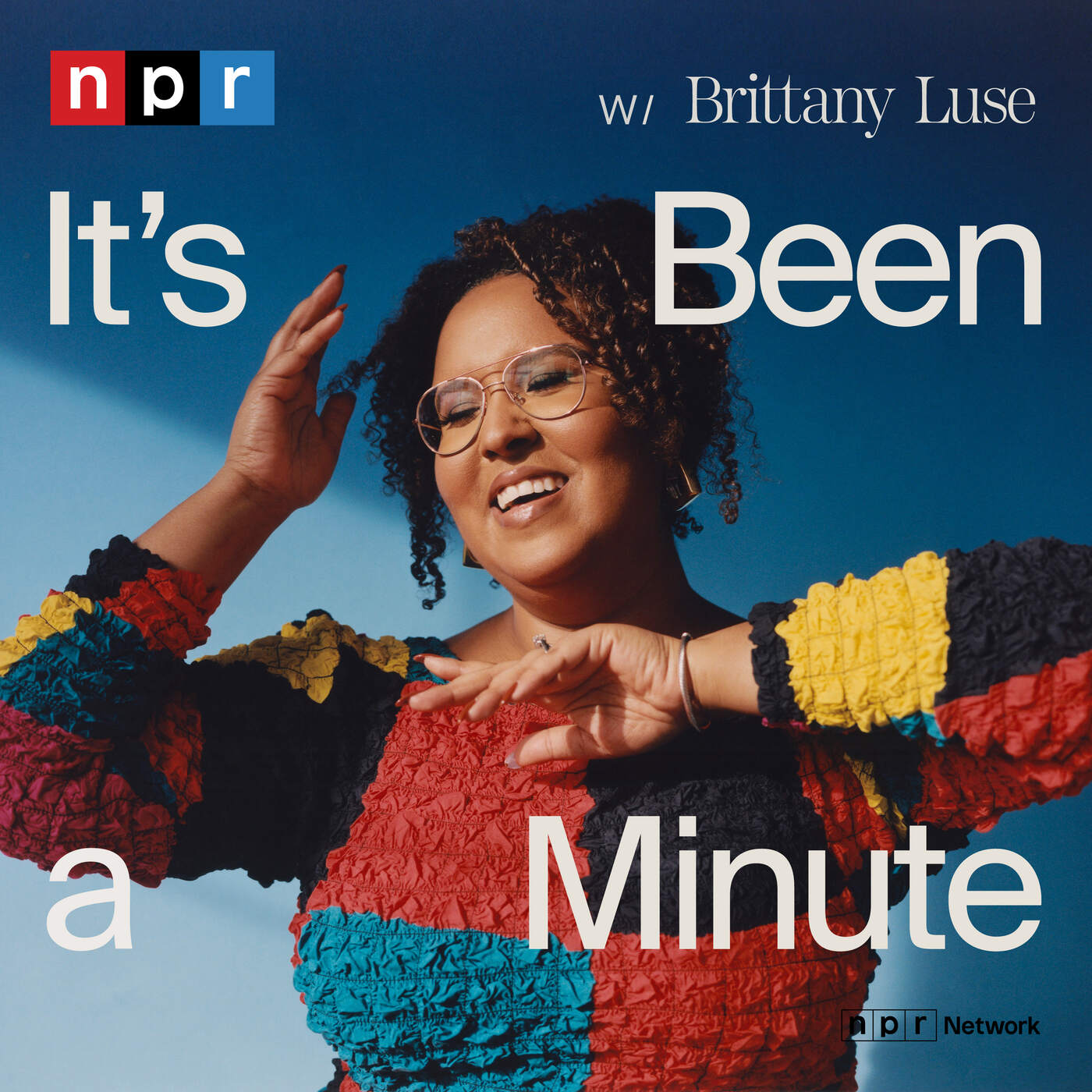
It's Been a Minute
NPR·1,121 episodes·Several times a week
Quick Facts
Want in on a secret? Your likes and dislikes didn't develop by accident.
There are subtle and not-so-subtle forces around you, shaping what you think, how you act, and even who you think you are. Brittany Luse is here to break the spell and help you feel wiser in a society that makes things blurry.
THE BEST POP CULTURE PODCAST AWARD WINNER AT THE 2025 SIGNAL AWARDS It’s Been A Minute with Brittany Luse is the best podcast for understanding what’s going on in culture right now, and helps you consume it smarter. From how politics influences pop culture to how identity influences tech or health, Brittany makes the picture clearer for you every Monday, Wednesday, and Friday.It’s Been A Minute reaches millions of people every week.
Join the community and conversation today. Support public media by joining NPR+ at plus. .
You’ll get perks for over 25 NPR podcasts, including sponsor-free listening for It's Been A Minute.
Episodes
Latest Episode
October 21, 2026 · 17m
Who do you trust to help you make decisions about your sexual health? In the absence of widespread public health campaigns and high-profile narratives in TV and film about HIV prevention, Gen Z is turning to their chatbots of choice to help them make decisions regarding their sexual health. While some call it innovative, is there something that gets missed when the hard conversations about safety and pleasure become a digital feedback loop? Brittany is joined by Jerrell K.L. Hardnett , Associate Director of Education and Advocacy at GLAAD, and Dr. Samantha Hill , Associate Professor of Pediatrics at Emory University to find out. Want more episodes on AI's influence on culture? You might be suffering from AI brain fry Generative AI's race problem Support public media with NPR+ and enjoy perks for over 25 podcasts like this one. This show’s perks include sponsor-free listening. Learn more at plus. . See pcm. for information about our collection and use of personal data for sponsorship and to manage your podcast sponsorship preferences. NPR Privacy Policy
More Episodes
Oct 20, 2026 · 32m
What makes a great Tiny Desk concert? For NPR’s Tiny Desk Creative Director Bobby Carter, success means making space for an artist's creativity within the show’s strict technical parameters -- no speakers, no in-ear monitors, no amplification. It’s a tough space to master, but after 14 years of producing shows, Bobby Carter knows what works. He loves when artists adapt to the space and “you get these little moments where you get a piece of their personality.” This week Brittany chats with him about his favorite shows, his dream guests, and the future of Tiny Desk.Support public media with NPR+ and enjoy perks for over 25 podcasts like this one. This show’s perks include sponsor-free listening. Learn more at plus.npr.org.See pcm.adswizz.com for information about our collection and use of personal data for sponsorship and to manage your podcast sponsorship preferences.NPR Privacy Policy
Oct 19, 2026 · 34m
Non-consensually posted intimate images can devastate women – and beget male bonding.The burner accounts on X loosely grouped into the “burnerverse” started by bonding over college sports – but soon took a darker turn when some of them began trying to make salacious rumors or non-consensual intimate images of young women and their names go viral. Ej Dickson investigated the burnerverse for Wired, profiling one of these women who were doxxed – and found links between these burner accounts and college fraternities. But what makes misogyny such a potent tool for men’s bonding? And with laws against non-consensually distributed intimate images in all 50 states – how is it still happening at scale?To talk more about the culture that supports this kind of harassment and the structures that keep it in place, Brittany is joined by Ej Dickson, senior culture writer at wired, and Dr. Mary Anne Franks, professor at the George Washington University Law School and president of the Cyber Civil Rights Initiative.Support public media with NPR+ and enjoy perks for over 25 podcasts like this one. This show’s perks include sponsor-free listening. Learn more at plus.npr.org.See pcm.adswizz.com for information about our collection and use of personal data for sponsorship and to manage your podcast sponsorship preferences.NPR Privacy Policy
Oct 16, 2026 · 28m
As our climate crisis continues to unfold, who gets to keep the lights on? On August 11th, a derecho hit northwest Indiana, and the predominantly Black city of Gary was left without power for 14 days… which makes it one of the longest power outages in modern US history, according to Electric Choice. As more and more reports of outages and struggling infrastructure come out of these seasonal storms, it made Brittany wonder: How does where we live - or even certain attitudes about where we live - affect the quality of service we get? To answer that question, Jenae Barnes, health and environment reporter, and Shalanda Baker, Professor of Environment and Sustainability; Vice Provost for Sustainability and Climate Action at the University of Michigan join the show. Jenae and Shalanda walk Brittany through how our aging power grid - coupled with climate change, the strain of new technologies, and a lack of investment - exposes the systemic shortcomings that very well might leave all of us in the dark. NIPSCO’s full message to their customers here.Support public media with NPR+ and enjoy perks for over 25 podcasts like this one. This show’s perks include sponsor-free listening. Learn more at plus.npr.org.See pcm.adswizz.com for information about our collection and use of personal data for sponsorship and to manage your podcast sponsorship preferences.NPR Privacy Policy
Oct 14, 2026 · 27m
She's America's sweetheart, but she just might be America's superhero as well.The American cheerleader has become one of the nation's most cemented symbols of femininity, girlhood, and youthful power. But how does paying attention to the real life experiences of cheerleaders tell a different story about America's history of education, race, and gender? Brittany is joined by Dr. Natalie G. Adams, editor of The Cheer Reader, and contributor Dr. Amira Rose Davis to find out.Interested in more conversations on sports and gender? Check out these episodes:Would you let your kids play football?The strange politics of PilatesSupport public media with NPR+ and enjoy perks for over 25 podcasts like this one. This show’s perks include sponsor-free listening. Learn more at plus.npr.org.See pcm.adswizz.com for information about our collection and use of personal data for sponsorship and to manage your podcast sponsorship preferences.NPR Privacy Policy
Oct 13, 2026 · 39m
We’re in an era where everyone can be a celebrity. And that’s okay! For the past ten years, Bobby Finger and Lindsey Weber, hosts of the podcast Who? Weekly, have dissected the celebrity landscape. From the declining power of A-List celebrities to the rising power of influencers, the duo have investigated how fame and power have shifted over the last decade. They’ve asked the question: ‘Who gets to be famous?’ And discovered, ‘ well, nowadays, anyone.’ I Want to Be Famous: When Everybody and Nobody Is a Celebrity is their new book where they explore what they've learned about the ephemeral nature of fame, celebrity, and our collective obsession with reality television. Support public media with NPR+ and enjoy perks for over 25 podcasts like this one. This show’s perks include sponsor-free listening. Learn more at plus.npr.org.See pcm.adswizz.com for information about our collection and use of personal data for sponsorship and to manage your podcast sponsorship preferences.NPR Privacy Policy
Oct 12, 2026 · 25m
Census data about race can be incredibly important – but we might lose it.The Trump administration has proposed to stop asking people in the U.S. about their race and ethnicity in the upcoming 2030 census. But what's the point of getting rid of these questions? And what makes the narratives around our nation's demographics so fraught?To get into it, Brittany is joined by Russell Contreras, senior race and justice reporter at Axios, and Hansi Lo Wang, a correspondent at NPR who covers voting rights and the census.For more episodes about policy and culture, check out:Bacteria is taking over the food pyramidIs your city shaped by yuppie taste?Don't get got by big MILK(00:00) Understanding the Trump administration's census proposal(02:58) Will the government stop collecting data on race?(05:34) What we use race data for(10:04) The proposal to stop counting some non-citizens in the census(14:42) How shifting categories might change census data(20:52) Who's afraid of America's changing demographics?Support public media with NPR+ and enjoy perks for over 25 podcasts like this one. This show’s perks include sponsor-free listening. Learn more at plus.npr.org.See pcm.adswizz.com for information about our collection and use of personal data for sponsorship and to manage your podcast sponsorship preferences.NPR Privacy Policy
Oct 9, 2026 · 27m
Palestinians are challenging the narrative one story at a time.Editor-in-Chief of The Key, Sara Yasin, wants us to rethink what she calls ‘it’s complicated' journalism. As more young people are exposed to the destruction in Gaza -- outside of traditional media outlets -- Sara wanted to provide a space where Palestinians can speak freely about what’s going on around them.Enter: The Key, an online publication that focuses on “analysis, interviews, essays, reviews and reportage about Palestine.” Sara joins the show to get into The Key, what ‘fairness’ looks like for mainstream media in this moment, and how power informs framing. Support public media with NPR+ and enjoy perks for over 25 podcasts like this one. This show’s perks include sponsor-free listening. Learn more at plus.npr.org.See pcm.adswizz.com for information about our collection and use of personal data for sponsorship and to manage your podcast sponsorship preferences.NPR Privacy Policy
Oct 7, 2026 · 26m
Some of life's hardest lessons are learned in high school.In Jocelyn Bioh's Broadway play, School Girls; or, the African Mean Girls Play, the ladies of Aburi Girls' Boarding School live these hard lessons through their friendships, feuds, and the upcoming Miss Ghana 1986 beauty pageant. But what does a play about teenagers in the 80s have to tell us about gossip, girlhood, and how it feels to not be chosen for reasons out of your control? Brittany is joined by playwright Jocelyn Bioh and director Whitney White to find out.Want more conversations on theater and culture? Check out these episodes:'Cats: The Jellicle Ball' gets 10s across the boardHas Broadway lost its way?Tony nominee Jocelyn Bioh puts braiders centerstageCole Escola literally changes history in 'Oh, Mary!'Support public media with NPR+ and enjoy perks for over 25 podcasts like this one. This show’s perks include sponsor-free listening. Learn more at plus.npr.org.See pcm.adswizz.com for information about our collection and use of personal data for sponsorship and to manage your podcast sponsorship preferences.NPR Privacy Policy
Oct 6, 2026 · 35m
Author Mary H.K. Choi is obsessed with her mom.New York Times bestselling author, Mary H.K Choi, is known for her young adult novels Emergency Contact and Yolk. But her latest novel, Pool House, is for adults, and details the relationship between a Korean-American D-list actress in her 40s and her 20-year old daughter, who’s always lived in her mother’s shadow. Today’s chat is all about families – how they change, how they don’t, and why we keep on loving the ones who hurt us the most. Support public media with NPR+ and enjoy perks for over 25 podcasts like this one. This show’s perks include sponsor-free listening. Learn more at plus.npr.org.See pcm.adswizz.com for information about our collection and use of personal data for sponsorship and to manage your podcast sponsorship preferences.NPR Privacy Policy