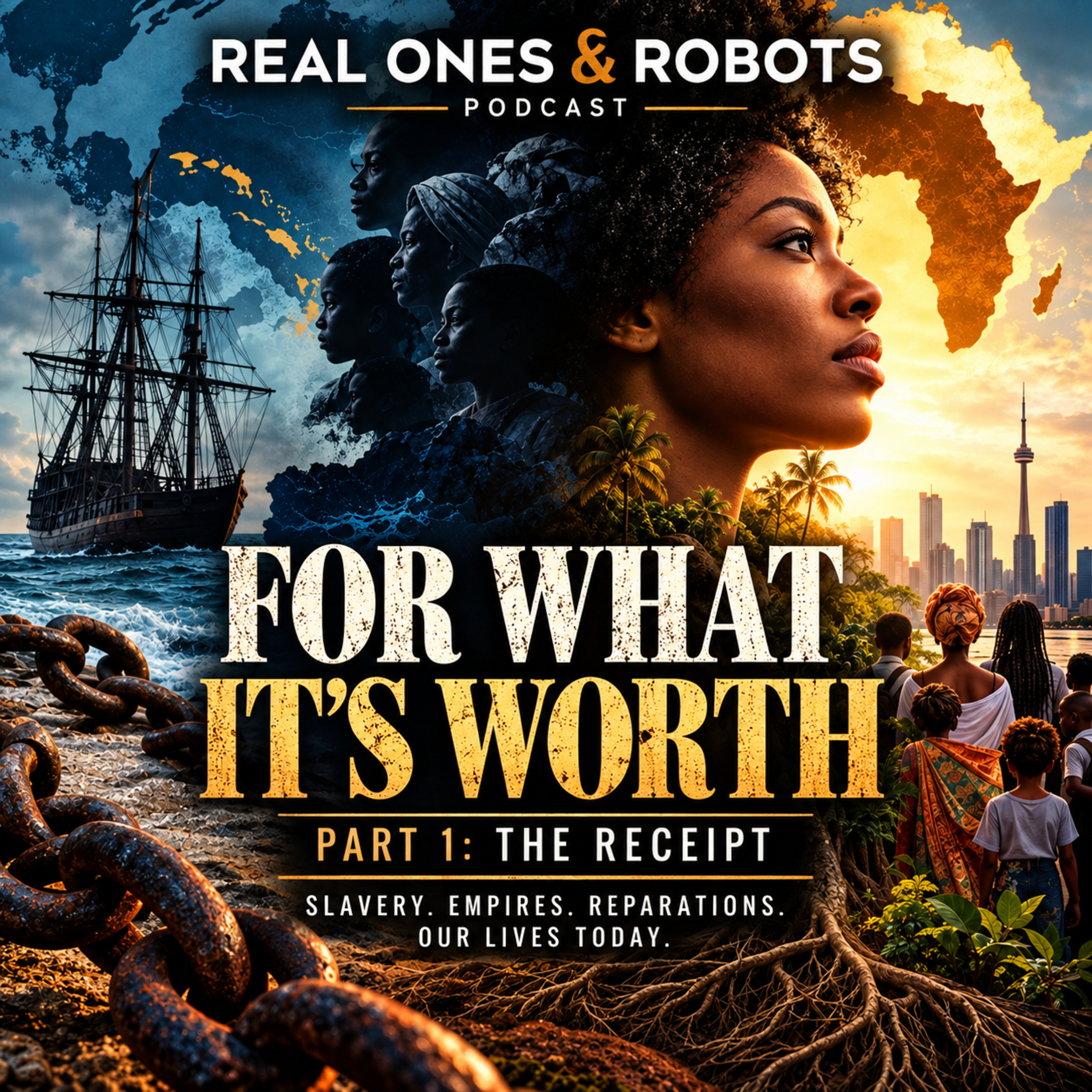
In 1834, Britain abolished slavery across most of its empire and paid out £20 million in compensation. Not to the people who had been enslaved.
To the people who claimed to own them. That bill is being argued over right now.
On 25 March 2026, the UN General Assembly declared the trafficking and racialized chattel enslavement of Africans the gravest crime against humanity and called for dialogue on reparatory justice: 123 countries voted yes, 3 voted no, and the UK, Canada and all 27 EU states abstained. In August, the UN's anti-racism treaty body adopted General Recommendation 40.
On 7 September, Jamaica petitioned King Charles to refer three questions to the Privy Council: was enslavement in Jamaica ever lawful, did it breach international law, and does Britain owe a remedy? CARICOM relaunched its revised reparations plan in Barbados this month, and Commonwealth leaders meet in Antigua and Barbuda in November.
So this isn't history. It's a receipt somebody is still trying to collect.
Casey and Jay go through the paperwork. The appraisers who sorted human beings into classes and attached a price to each.
The MP whose Jamaican estate held 572 people. The Liverpool merchant who received the largest payment in the entire scheme, and the 1823 uprising on his plantation where Britain sent in troops.
Then the arguments. Was it legal at the time, and does that settle anything?
What did the United States pay, and to whom? What is Canada's part in a story?
And what do the competing models actually measure, from the Brattle Group's $100–131 trillion to California's per-harm calculations? The episode starts before the ships, with Mali, Timbuktu, Benin, and the king of Kongo who wrote to Portugal in 1526 asking it to stop.
It ends with a ship, a courtroom, an insurance claim, and 132 people treated as cargo. Casey and Jay don't agree.
Part 2, After Emancipation, asks what that receipt bought: land, credit, housing, inheritance, and 160 years of wealth data. SOURCES UN A/RES/80/250 (25 Mar 2026) and explanations of vote; CERD General Recommendation 40 (Aug 2026); UN Basic Principles on the Right to a Remedy, A/RES/60/147 (2005); ICERD.
Slavery Abolition Act 1833; UCL Legacies of British Slavery database (Spring Garden and John Gladstone awards); The National Archives (UK); HM Treasury FOI 2018-00186 on the compensation loan and the 2015 bond redemption. SlaveVoyages and the US National Park Service on embarkations, deaths in the Middle Passage, and arrivals in the Caribbean; Michael Tadman and B.
W. Higman on Caribbean demography.
The Antelope (1825); United States v. La Jeune Eugénie (1822); Gregson v.
Gilbert (1783); Korematsu (1944), Civil Liberties Act 1988 and Trump v. Hawaii (2018); Canada's 1988 Japanese Canadian Redress Agreement; Jarvis v.
United States (2021); Judicial Committee Act 1833, s.4. DC Compensated Emancipation Act 1862; 14th Amendment, s.4; 1860 census slave schedules.
Parks Canada on slavery in the colonies that became Canada; the Chloe Cooley case and the Act Against Slavery 1793; Statistics Canada on Caribbean-born Black immigrants, the 2021 Census, and poverty across generations. Brattle Group report (2023) with Judge Patrick Robinson and the University of the West Indies; Thomas Craemer (2015); Darity and Mullen, From Here to Equality; California Task Force (AB 3121); Federal Reserve Survey of Consumer Finances 2022.
Abuja Proclamation 1993; Accra Proclamation 2023; African Union 2025 reparations theme; Howard-Hassmann (2004) on the Group of Eminent Persons; IMF and French Treasury documentation of CFA franc arrangements. CARICOM Ten Point Plan, revised 2026.
Podcast news, creator spotlights & picks
Comments (0)
No comments yet.