1h 9m
The Man Who Refused to Let Dallas Forget | Dr. W. Marvin Dulaney
History doesn't disappear all at once. It disappears one story at a time, one name nobody writes down, one photograph nobody identifies, one neighborhood that changes before anyone documents what stood there before, one elder who passes away before anyone asks the question.
For more than 50 years, Dr. W.
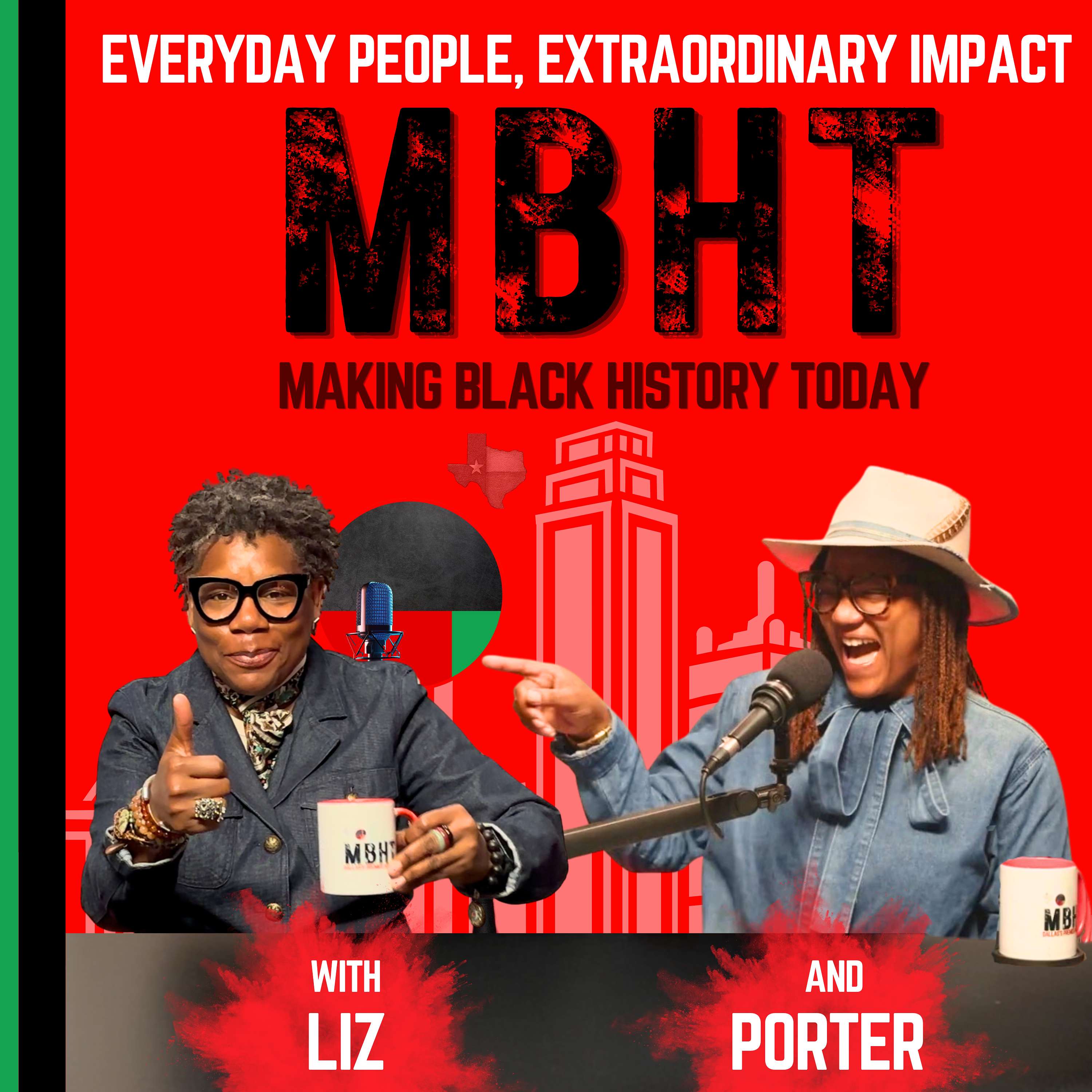
Marvin Dulaney has made it his life's work to make sure that doesn't happen. In this episode of Making Black History Today, Liz and Porter sit down with the historian, scholar, educator, author and preservationist for a powerful conversation about Black Dallas history, African American history, Dr.
Carter G. Woodson's legacy and the responsibility we all share to preserve our stories.
Dr. Dulaney takes us through a journey that began with a history conference in 1970 and grew into more than five decades of teaching, researching, writing and preserving African American history.
His work has explored the Black experience in Texas, the Civil Rights Movement and the history of Black police officers in America. He has led the Avery Research Center for African American History and Culture, served the African American Museum, Dallas in curatorial and executive leadership roles, taught generations of students and served as president of the Association for the Study of African American Life and History (ASALH) the organization founded by Dr.
Carter G. Woodson.
And in 2026, that connection carries even greater significance. One hundred years ago, in 1926, Dr.
Carter G. Woodson established Negro History Week, laying the foundation for what would eventually become Black History Month.
But Woodson's vision was bigger than a week or a month. The ultimate goal was a nation that understood a fundamental truth: Black history is American history.
A century later, the work continues. In this conversation, we explore: • The Black Dallas history many of us grew up surrounded by without realizing we were living inside history • The people, neighborhoods and institutions that helped build Black Dallas • The stories that have already been lost—and the history still waiting to be uncovered • Why museums, archives and institutions like the African American Museum, Dallas matter • Dr.
Carter G. Woodson, ASALH and 100 years of preserving African American history • Why interviewing our elders and documenting living memory is urgent • Freedom Schools, the African American Heritage Bowl and teaching Black history to the next generation • What today's historians, storytellers and communities must preserve for tomorrow But this conversation isn't only about looking backward.
It's about what we choose to carry forward. Dr.
Dulaney has spent more than 50 years helping preserve the history that came before us. Making Black History Today is working to document the history unfolding around us now.
Different generations. Different methods.
The same responsibility. Because somebody has to keep the archive.
Somebody has to identify the people in the photograph. Somebody has to interview the elder.
Somebody has to make sure one more name makes it into the record before it disappears. And somebody has to document the history we're making today.
So after you listen, we want you to consider one question: What history are you living right now that you worry future generations might forget? In your city.
Your neighborhood. Your family.
Your profession. Your community.
Because the history we fail to preserve today may become the history someone spends decades trying to recover tomorrow. Making Black History Today is the digital archive of today's history-makers, documenting today's history for tomorrow.
Follow or subscribe wherever you get your podcasts and share this episode with someone who believes our stories are worth preserving. New episodes every other Thursday.
Making Black History Today
Podcast news, creator spotlights & picks
Comments (0)
No comments yet.