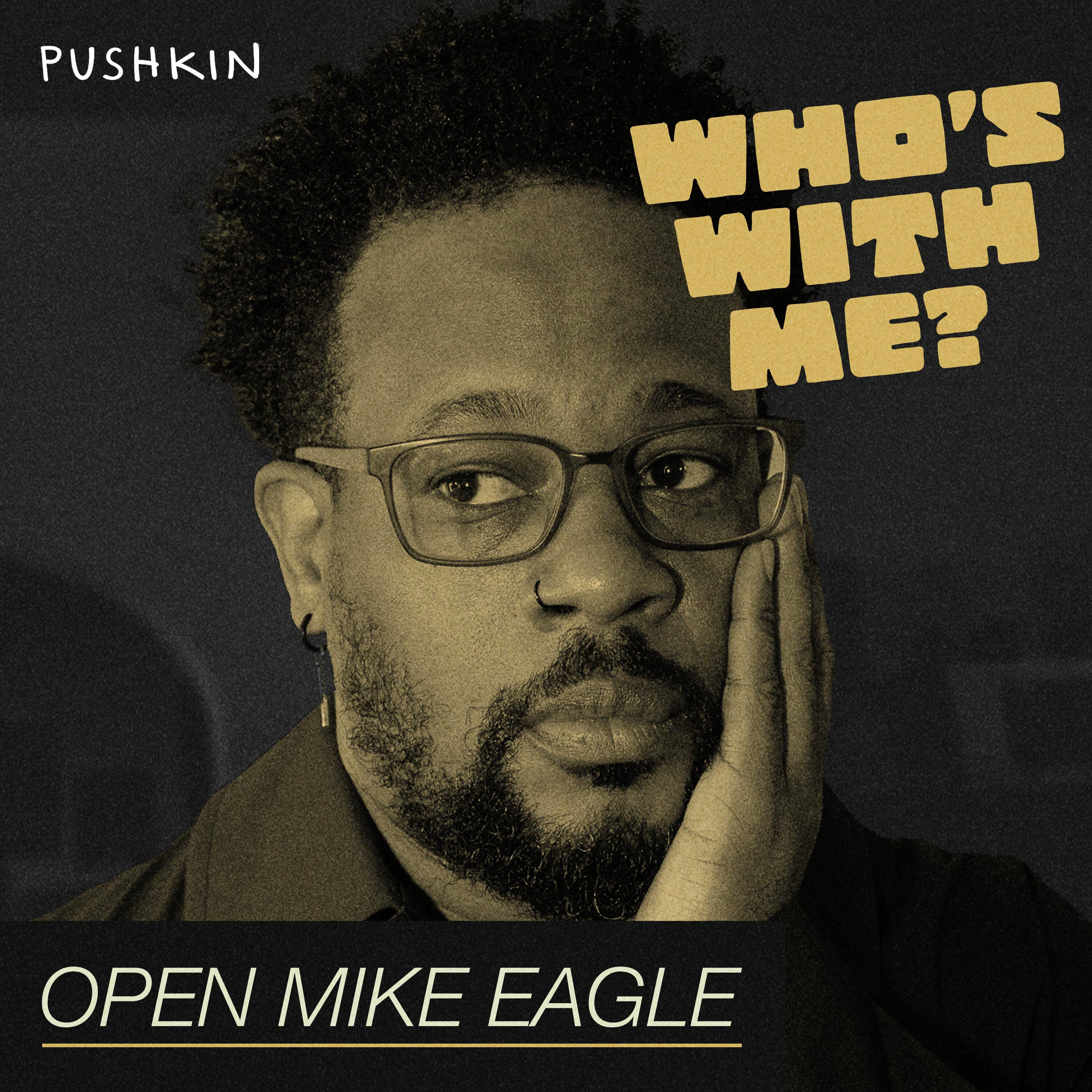
The interview opens, as always, with Kamau giving Open Mike Eagle his flowers. Open Mike Eagle is someone Kamau feels a lot of kinship with, both men being somewhat outsiders in their given crafts.
After, they shift to recalling how they met during the production of Kamau’s TV show Totally Biased, and the chaotic period when the show expanded to five nights a week. Both describe their shared “over there” feeling, being spiritually outside mainstream entertainment spaces even when physically in LA or New York, and how that shapes their careers.
Mike recounts growing up on Chicago’s South Side, raised largely by grandparents, kept indoors because of neighborhood violence, and absorbing hours of MTV and The Comedy Channel, which helped form his alt-Black sensibility. He explains discovering Chicago’s underground hip hop scene, breakdancing, graffiti, DJing, freestyling, and building a sense of self through that meritocratic culture.
Initially scared of rap as a child, hearing Eazy-E with his mom, he later finds his lane in “art rap,” naming his first album Unapologetic Art Rap. They discuss capitalism’s role in killing alternative rap once fans stopped buying records, and both agree American capitalism is the “ultimate villain” behind many social issues.
Mike describes his TV peak with The New Negroes alongside Method Man, Lizzo, and MF DOOM, then the emotional toll of Comedy Central’s handling and the network “shitting in his heart,” leading to no second season. He describes his recent YouTube work—clips from Twitch, commentary on the Kendrick vs.
Drake battle and Diddy’s arrest—and the tension between chasing algorithmic topics and only speaking on issues he genuinely cares about, like Jack Harlow and misogyny in hip hop. They close with parenting and the manosphere: Mike’s 17-year-old son at a mostly white school, his constant effort to warn him that many online figures and artists “hate women,” and the need to fight those influences.
Mike offers a five-song “starter kit” for his catalog and shares a core life lesson: maintaining deep gratitude for improbable achievements—from underground success to seeing a billboard of his own TV show outside his bedroom window—even in lean years. Check out Inglewood Mutual Aid at and Los Angeles Mutual Aid at Who's With Me is produced by Rabbit Grin Productions.
Music by Chris Dowd. Distributed by Pushkin Industries.
See for privacy information.
Podcast news, creator spotlights & picks
Comments (0)
No comments yet.