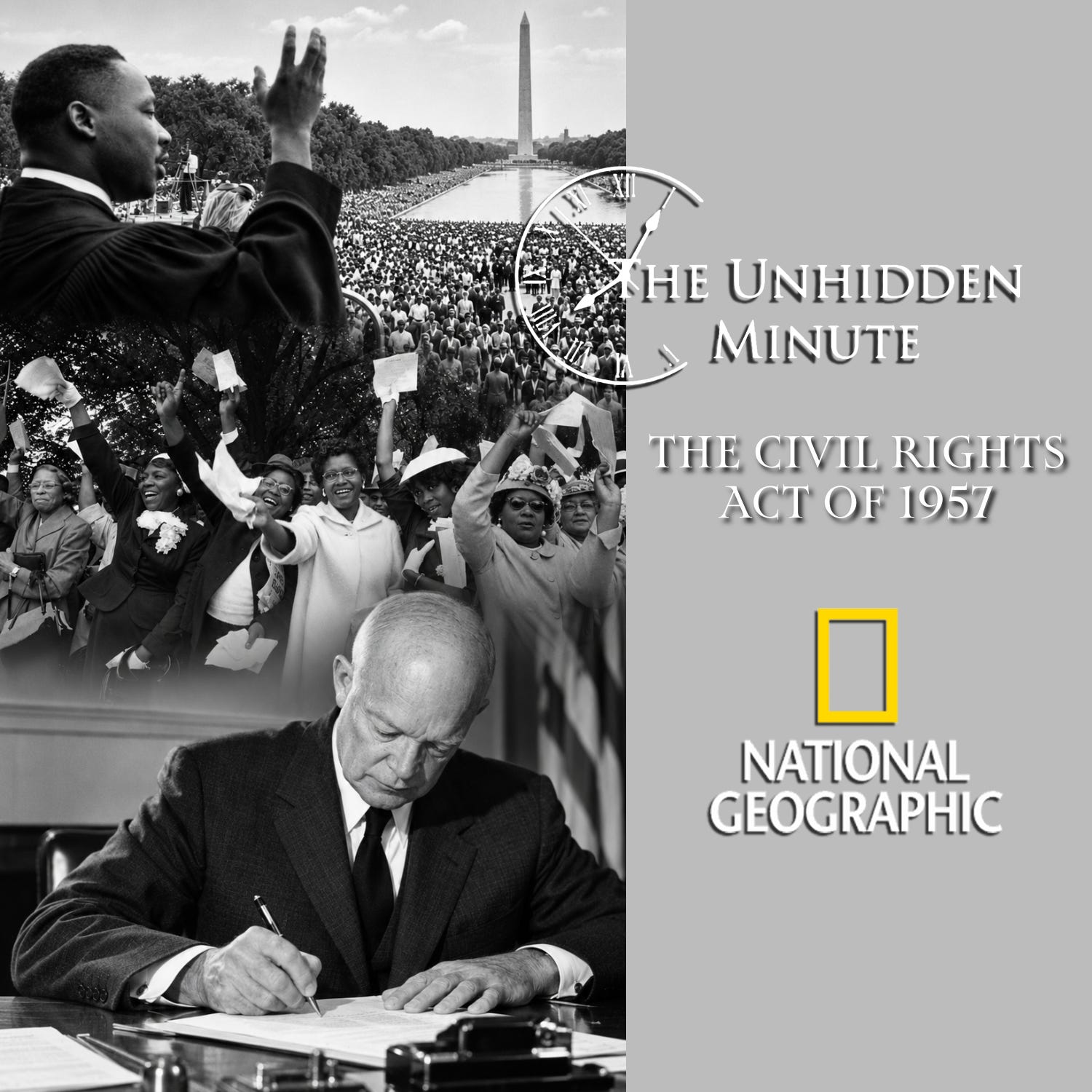
After Reconstruction, Southern states systematically stripped Black Americans of their voting rights through literacy tests, intimidation, economic retaliation and violence. But on September 9, 1957, President Dwight D.
Eisenhower signed Public Law 85-315, the first federal civil rights legislation enacted since 1875. Known as the Civil Rights Act of 1957 , the legislation came amid mounting pressure for voting rights.
In May of that year, Dr. Martin Luther King Jr. joined thousands of protesters at the Prayer Pilgrimage for Freedom in Washington, D.C., where he delivered his “Give Us the Ballot” speech.
The new law created the U.S. Commission on Civil Rights and a Civil Rights Division within the Justice Department , while giving the attorney general new authority to challenge voter suppression in federal court.
The law was limited, and discrimination continued. But after generations of retreat, the federal government had reentered the fight to protect Black voting rights.
The Joy Trip Project celebrates the enduring legacy of Black American History. The Unhidden Minute is part of the Unhidden Podcast Project supported through a National Geographic Explorer Grant from the National Geographic Society , with the cooperation of the National Park Service .
This series elevates the untold stories of Black American historical figures, events and cultural contributions. #unhiddenblackhistory #NationalParkService #yourparkstory #NationalGeographic #unhiddenminute Become a paid subscriber to the Unhidden Minute Podcast for one year and receive a free copy The Adventure Gap: Changing the Face of the Outdoors 10th Anniversary Edition by James Edward Mills . This is a public episode.
If you'd like to discuss this with other subscribers or get access to bonus episodes, visit jamesedwardmills.substack.com/subscribe
Podcast news, creator spotlights & picks
Comments (0)
No comments yet.