36m
Your Connection Rate Dropped 80% and Nobody's Talking About It | David Zeff - 2037
Connection rates have dropped roughly five times since before COVID. If ten percent of your calls used to turn into a conversation, you're probably closer to two now.
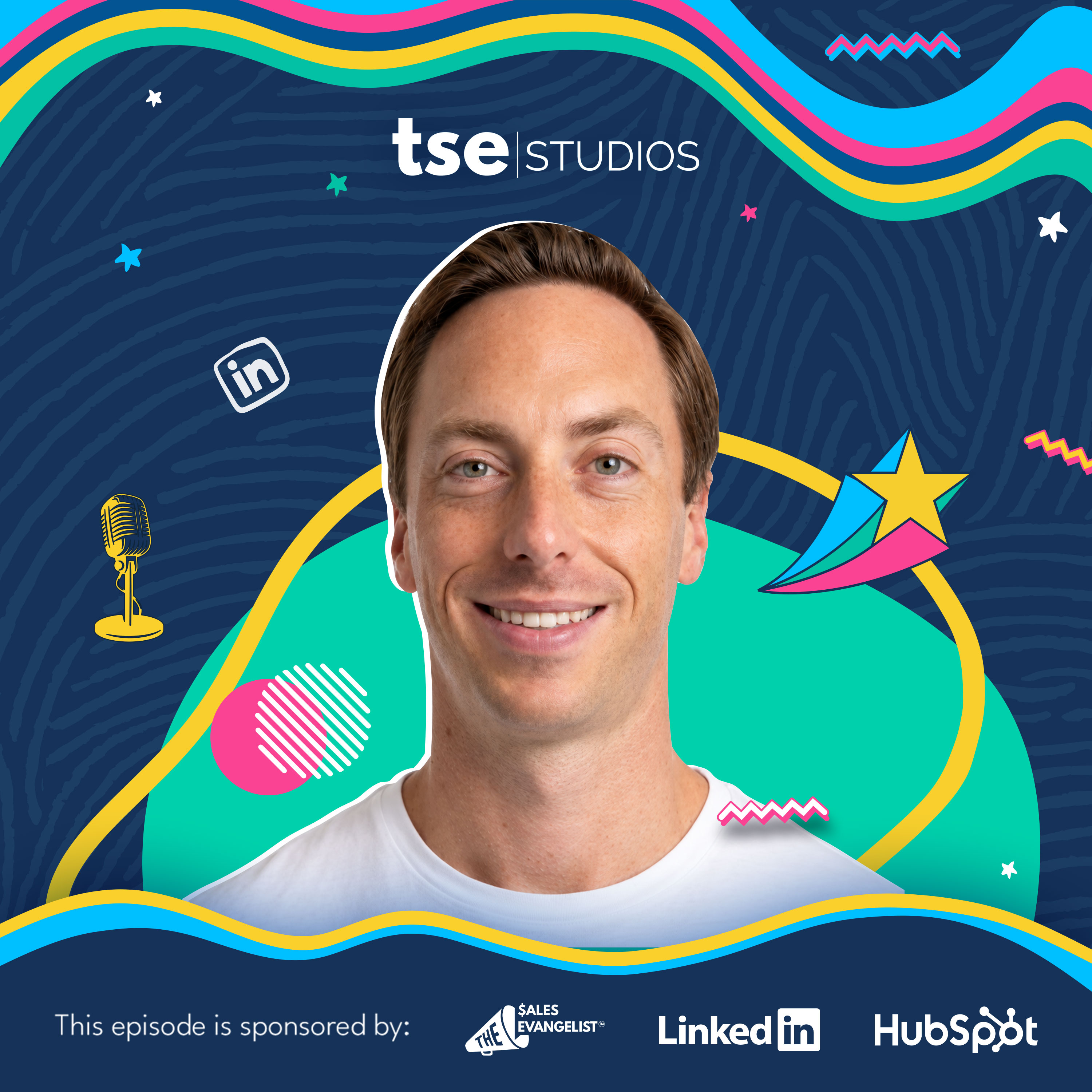
David Zeff , CEO of Whistle, runs an agency that makes cold outreach work for 350-plus B2B clients, and he broke down exactly what's changed, what hasn't, and the parts of outbound most people are too embarrassed to actually do. Why Connection Rates Have Collapsed Since COVID David's headline stat: connection rates have dropped roughly five times since the early 2010s.
If a rep used to get a conversation on ten percent of calls, that number is closer to two percent now. That drops compounds.
Fewer conversations means fewer meetings booked from the same amount of effort, cutting a rep's effective output roughly in half even before factoring anything else in. He points out that most investors and boards setting revenue benchmarks don't actually understand how much this single number has shifted, which means the targets built on top of it are often unrealistic from the start.
The Four Things Whistle Screens For Before Taking a Client Whistle turns away clients the way a lawyer might turn down a case they can't win. David treats a signed client as the start of the real work, not the finish line.
First: does the founder actually know their ICP? If they're still deciding between multiple very different buyer types, that's a major warning sign.
Second: is the total addressable market big enough to support a real sales motion, since a market of a few hundred accounts with multi-year sales cycles isn't a fit for most outbound efforts. Third and fourth: is there real marketing support behind the sales effort, and does the product have any real moat, since neither one used to be a dealbreaker a decade ago the way they are now.
The New Risk: Can Your Prospect Just Build It Themselves? David's newest red flag: prospects increasingly ask themselves whether they could just build a simple version of the product using AI tools instead of buying it.
His own team has looked at some clients' products recently and had the same reaction: this looks like something built quickly with AI, which means the prospect is likely to think the same thing. Sellers need a clear, early answer to that question, since it's showing up at the very top of the funnel now, not just at the negotiation stage.
Why Cold Email Copy Isn't the Real Story Prospects often ask David to see a sample of Whistle's email copy, expecting the wording itself to explain the results. His answer is always the same: seeing the email is like seeing the cheese and asking how that made the pizza.
The copy alone leaves out everything that actually got the message opened and read in the first place. Highly personalized details, like referencing someone's favorite sports team, used to work well on their own.
David is direct that this stopped being enough years ago, even though it still gets attention on LinkedIn as a screenshot-worthy tactic. Stop Separating the Brand From the People David points to Gong as the company that got this right early: during the shift to remote work, they made individual employees visible instead of hiding behind the company logo, including putting reps on billboards.
B2C brands have leaned on individual personalities for a long time. B2B is only catching up to that now, and companies that keep everything behind a logo are giving up a real advantage.
Donald shared a reference point from a past guest at Chili Piper, who said roughly half the deals in their pipeline had some connection to her personal LinkedIn activity, not because she was directly involved in every deal, but because buyers had engaged with her content somewhere along the way. Build Community Before You Need It David's third layer, beyond the basics and personal branding: building some form of community or network around your business, even a small one.
A simple example from one of his own clients: a marketing VP asked if Whistle could bring their clients together to trade notes, which turned into a referral network of consultants and adjacent service providers. It doesn't have to be a massive branded community.
Even something as basic as a small referral relationship, a shared cause you donate to together, or a network of people adjacent to your buyer who can talk about your space, counts and compounds over time. The Free Tactic Nobody Will Actually Do David's final, deceptively simple tip: export your personal contacts from WhatsApp or your phone, write one honest message explaining what you do and asking for a referral, and send it to twenty people a day.
His prediction is that most people won't actually do this, precisely because it's free, easy, and has no clever trick to hide behind if it doesn't work. He's currently running an open deal that came directly from this exact method, reaching out to a personal contact who referred him to someone else who's now moving through the sales process. "We're in sales.
You're always desperate. That's the job." — David Zeff Resources Connect with David Zeff on LinkedIn.
Visit Whistle to learn more about their outsourced sales development services. Join our LinkedIn cohort and learn to prospect the right way.
Visit Blue Mango Studios for help creating podcast production content. Sponsorship Offers This episode is brought to you in part by Hubspot.
With HubSpot sales hubs, your data tools and teams join a single platform to close deals and turn prospects into pipelines. Try it for yourself at .
This episode is brought to you in part by LinkedIn. Are you tired of prospective clients not responding to your emails?
Sign up for a free 60-day trial of LinkedIn Sales Navigator at . This episode is brought to you in part by the TSE Sales Foundation.
Improve your connection on LinkedIn and land three or five appointments with our LinkedIn prospecting course. Go to the .
Credits As one of our podcast listeners, we value your opinion and always want to improve the quality of our show. Complete our two-minute survey here: .
We’d love for you to join us for our next episodes by tuning in on Apple Podcast , Google Podcast , Stitcher , or Spotify . Audio provided by Free SFX, Soundstripe , and Bensound .
Other songs used in the episodes are as follows: The Organ Grinder written by Bradley Jay Hill, performed by Bright Seed, and produced by Brightseed and Hill.
Podcast news, creator spotlights & picks
Comments (0)
No comments yet.