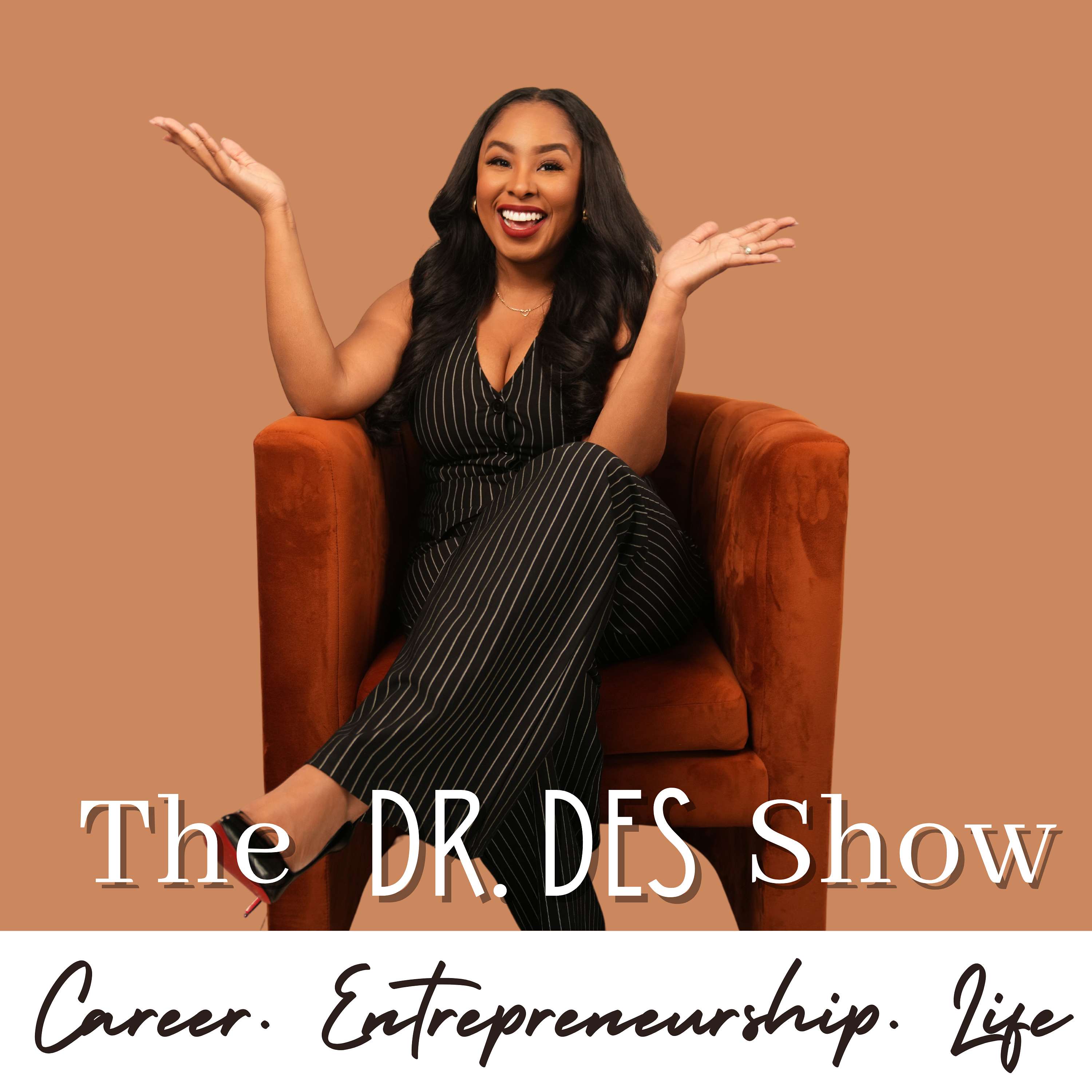
Resources Mentioned CEO School — free three-day live training, October 5–7: The CEO Circle — Dr. Des's 12-month business coaching program for public health founders scaling to consistent revenue: Join The Public Health Club — If you want to scale your public health business, the first thing you have to give up is busywork.
In this solo episode, Dr. Desiree "Dr.
Des" Strickland, DrPH — public health CEO and founder of The Public Health Club — breaks down why busy got rebranded as ambitious, and why filling your calendar isn't the same as hitting your revenue goals. She walks through the time audit she ran on her own week, the line between CEO tasks and operating tasks, why one-on-one coaching at $100 a session will never get you to half a million dollars, and the email habit that hands your priorities over to everybody else.
If you're talented, ambitious, and still not making the money you set out to make this year, this one's for you. In This Episode, You'll Learn Why constant busyness is often a form of avoidance, not ambition How to run a one-week time audit on your own business (and what to look for in it) The difference between CEO tasks and operating tasks — and how to sort yours Why a one-on-one coaching model can't scale to a half-million-dollar goal What checking email first thing actually costs you in focus and priorities When "I'm too busy to grow" really means it's time to hire How to identify your revenue-generating activities and do more of them Frequently Asked Questions What's the difference between CEO tasks and operating tasks?
CEO tasks are the things only you can do — hosting your podcast, pitching clients, setting business strategy, closing deals. Operating tasks are everything someone else could do: drafting proposals, sending follow-up emails, building email campaigns, scheduling.
Most founders fill their day with operating tasks because those feel productive, then wonder why revenue stalls. How do you know if you're doing busywork instead of growing your business?
Run a time audit. Write down everything you do for one full week, then ask a single question of each item: did this move me closer to my revenue goal?
Dr. Des found she was losing whole afternoons to mid-day email and back-to-back client meetings — work that felt necessary but generated nothing.
Why can't one-on-one coaching scale? Because there's only one of you.
At $100 a session, hitting half a million dollars means running the math on hours you don't have — roughly a session every hour, around the clock. There's nothing wrong with starting there, but at some point the business model itself has to change, or the goal stays out of reach.
Should I check email first thing in the morning? If you want your day driven by your priorities, no.
Starting with your inbox means starting with everyone else's agenda. Dr.
Des doesn't open email until after 10 a.m., when she reviews it with her assistant. Mondays start with CEO planning: looking at the full week and protecting the revenue-generating work first.
When should a public health consultant hire help? When delivery is eating the time you need for growth.
If client work, coaching calls, and travel fill your calendar, nobody is out pitching, speaking, or selling. Hiring someone to deliver services frees you to do the work that brings revenue in — which is the point at which you actually have a business, not a job.
Is busyness really a form of laziness? Tim Ferriss argues it can be.
Driven founders default to doing more because it's easier than facing the hard, high-stakes work — the cold pitch, the conference room full of strangers, the ask. Tweaking your website is comfortable.
Building a pipeline isn't. The busywork is often avoidance wearing a productivity costume.
Podcast news, creator spotlights & picks
Comments (0)
No comments yet.