7m
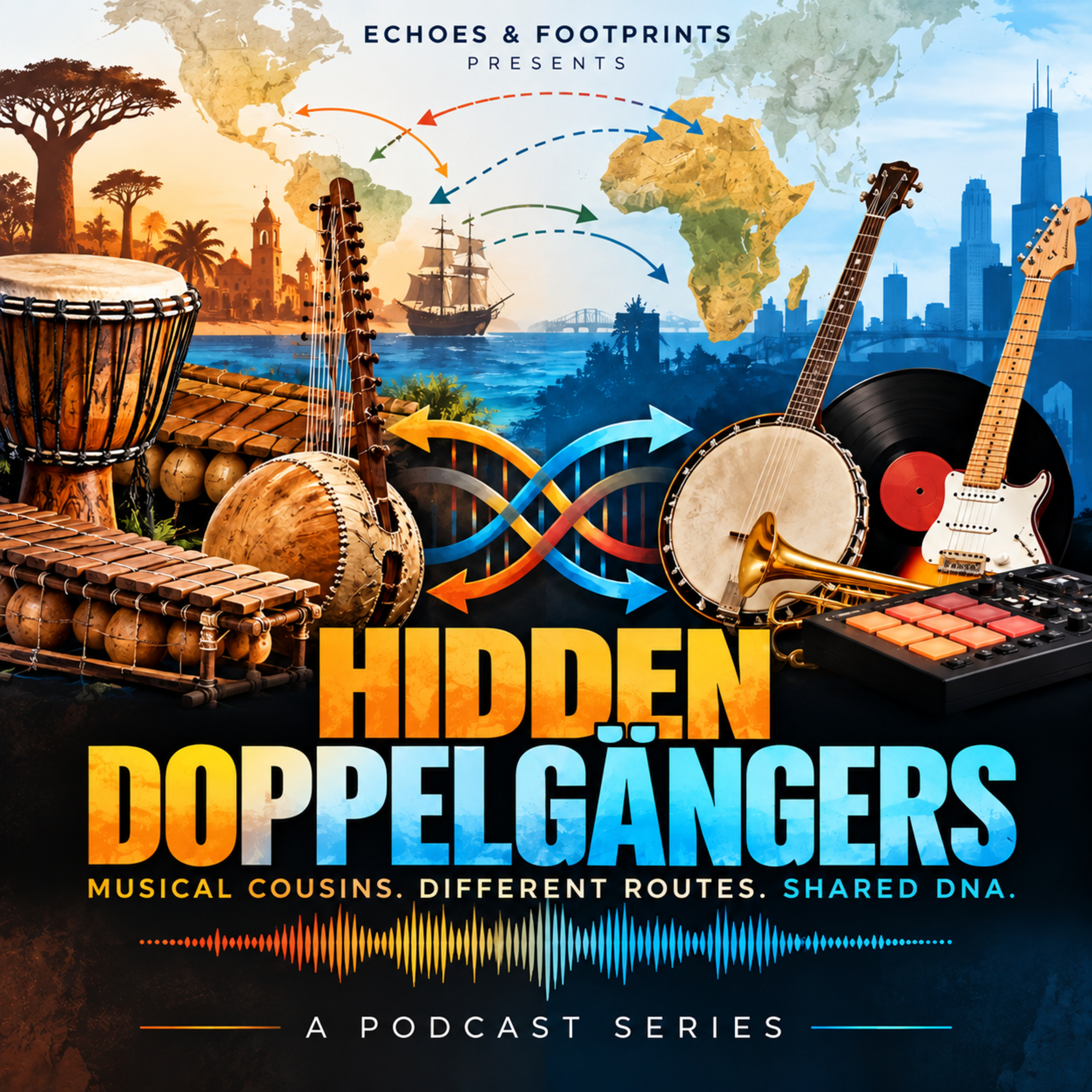
Hidden Doppelgängers – Episode 2: First Cousins – Bebop & Doo-wop: Same Town. Different Houses.
What do the sophisticated improvisations of Bebop jazz and the street-corner harmonies of Doo-wop have in common? More than you might imagine.
In this second episode of Hidden Doppelgängers: The Musical Family Reunion , Echoes & Footprints explores how two seemingly different musical traditions emerged from the vibrant African American communities of mid-20th-century cities. One cousin found its voice in late-night jazz clubs, pushing the boundaries of harmony and improvisation.
The other grew up on front stoops and street corners, where friends transformed simple melodies into rich vocal conversations. Different sounds.
Different settings. But a shared musical inheritance: call and response, collective creativity, and the belief that music comes alive when people listen to one another.
Follow Bebop and Doo-wop as their musical descendants help shape modern jazz, soul, Motown, and R&B. Then join our Listen Lab to discover the family resemblance hiding in plain sight.
Same town. Different houses.
Different sounds. One musical family.
Because the Beat remembers. And sometimes, the Beat remembers family.
References DeVeaux, S. (1997). The birth of bebop: A social and musical history.
University of California Press. Gioia, T. (1997).
The history of jazz. Oxford University Press.
Owens, T. (1996). Bebop: The music and its players.
Oxford University Press. Smithsonian Institution. (n.d.).
Jazz. Smithsonian Music.
Smithsonian National Museum of African American History and Culture. (2019). Harmonious mixes.
Forever doo-wop: Race, nostalgia, and vocal harmony. (n.d.). JSTOR.
Podcast news, creator spotlights & picks
Comments (0)
No comments yet.