Queue Points Doesn't Do Nostalgia. It Does Homework.
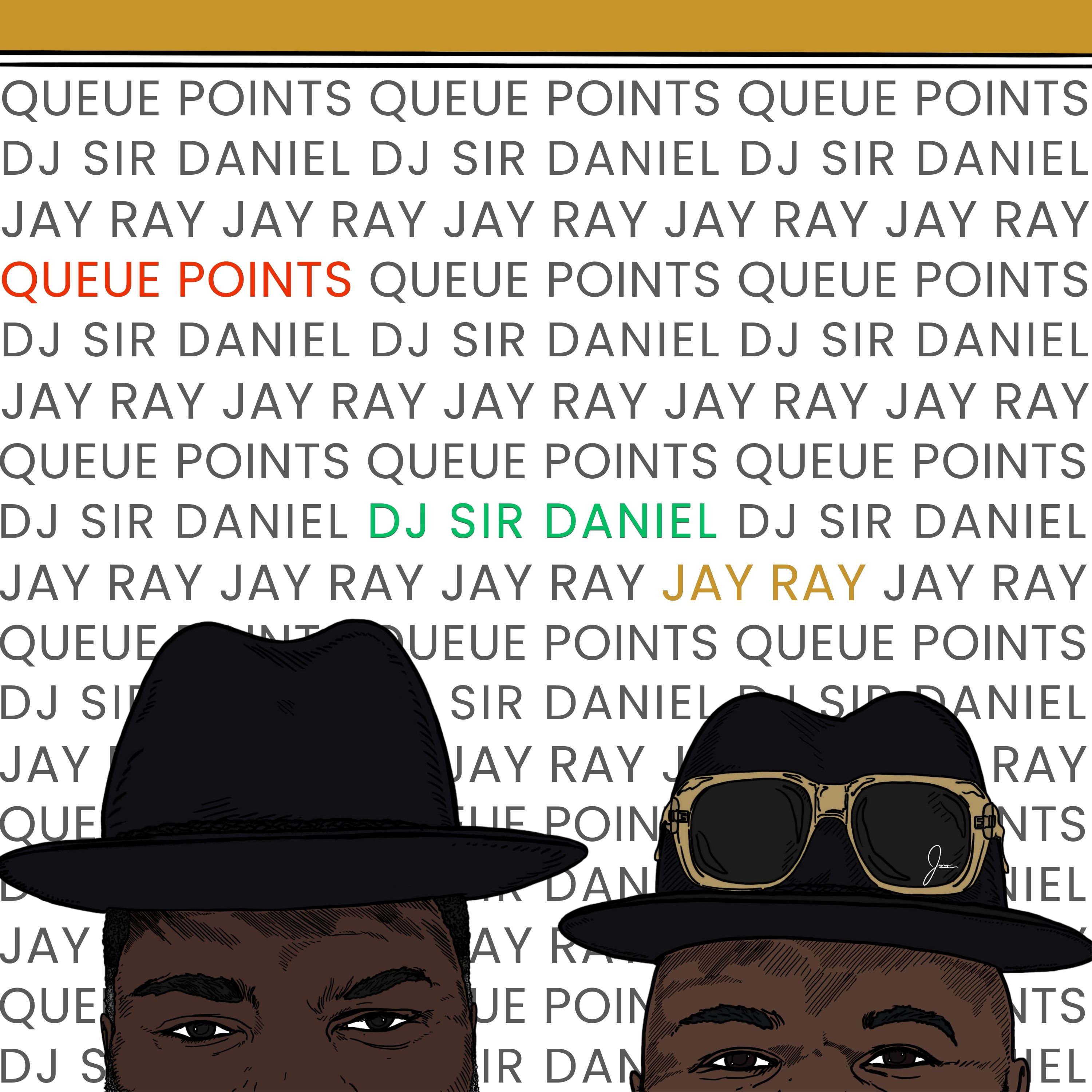
DJ Sir Daniel and Jay Ray turn a Fat Joe controversy, a DJ documentary, and a Faith Evans anniversary into something closer to cultural cross-examination than nostalgia. A look at why Queue Points keeps landing on award shortlists.
Most music-history podcasts want to remind you why an old record still slaps. Queue Points wants to know what that record cost somebody, who's still paying for it, and why the argument about it never actually ended. Hosts DJ Sir Daniel and Jay Ray have built the show around that instinct for 262 episodes now, and the run they've put together since July is as good an argument as any for why this one belongs in your queue.
Take their September 14th episode, built around Fat Joe's public defense of his N-word usage. A lesser show turns that into ten minutes of outrage and moves on. Sir Daniel and Jay Ray instead trace how Fat Joe leans on his Bronx hip-hop upbringing to justify the word, weigh what doubling down costs an artist's long-term legacy, and then pivot into a live debate in DJ culture over technical skill and gatekeeping that had been playing out in response to DJ Rob Swift. Two seemingly unrelated controversies, both about who gets to claim authority over Black music and on what terms. That's the show's whole operating system.
Who's behind the turntable
Queue Points is a Black Podcasting Award and Ambie Award nominee, which tells you the industry noticed the same thing listeners did. DJ Sir Daniel is a DJ and selector with Wax Fundamentals, Atlanta's all-vinyl DJ crew, which means the crate-digging instinct that runs through the show isn't a bit, it's his day job. Jay Ray, full name Johnnie Ray Kornegay III, is a podcast consultant and photographer who also serves as creative director for the Counter Narrative Project. Between them, the show gets a producer's ear for pacing and a DJ's physical relationship to the music, and it shows in how confidently they move between a chart-pop parody sketch one week and a battle-rap eulogy the next.
The run that makes the case
Go back one week from the Fat Joe episode and you land on the Krate Digga and Dominic Lawson conversation, a two-part interview built around "The Krate Doc," a new documentary following DJ Krate Digga through five gigs in one Columbus, Ohio weekend. Jay Ray talks filmmaking craft with director Dominic Lawson, who cut his teeth in narrative podcasting before turning to documentary. Then DJ Sir Daniel sits with Krate Digga himself to trace 29 years behind the turntables back to a dorm room at Kentucky State University, where DJing at an HBCU in the mid-'90s meant staying fluent in Master P and UGK alongside Nas and Mobb Deep. It's a rare structure, one podcast conversation split into two vantage points on the same subject, and it works because both hosts are genuinely curious about the mechanics, not just the highlight reel.
The week before that, the show coined a phrase worth stealing: "trauma commerce." Their episode on Nicki Minaj and Whitney Houston traces how the industry's old model of curated mystique, the kind that shaped Michael Jackson and Prince, gave way to a model where public breakdown became the marketing plan. They connect Bobby Brown and Whitney Houston's reality-TV unraveling to R. Kelly's combative Gayle King interview and Nicki Minaj's Instagram Live moments, then close on Tina Turner as the clearest case of trauma outliving an artist's attempt to move past it. It's the kind of episode that reframes how you watch every celebrity meltdown that shows up in your feed afterward.
Not every episode is that heavy. Their look at Kim Wayans' run of music parodies on "In Living Color" treats her Crystal Waters and Vanessa Williams sketches as real cultural criticism disguised as comedy, and makes a convincing case that Wayans used impersonation to observe the music industry's treatment of Black women rather than to mock the artists themselves. And their MTV Unplugged episode is a genuinely useful piece of music history on its own: how the Milli Vanilli lip-syncing scandal turned an acoustic side project into appointment viewing, and how Uptown Records' 1993 label-wide taping, featuring Mary J. Blige and Jodeci, pushed New Jack Swing artists to prove they could do it without the drum machine.
Further back, an episode asking whether Sly Stone and D'Angelo get saddled with a label that costs them more than it gives, and a 30th-anniversary breakdown of Faith Evans' debut album that argues her record set as high a bar as Mary J. Blige's "What's the 411." In July, the show paused its usual format entirely to remember Sparky D, one of hip-hop's first female battle rappers, following her death, tracing her run through the Roxanne Wars and her later path to recovery and ministry with the same care they give a chart-topping album.
Why this one's worth your feed
What ties all of it together is a refusal to treat Black music history as trivia. Every episode starts from a specific artifact, a documentary, an anniversary, a controversy, a death, and uses it to ask a bigger question about ownership, legacy, or who gets believed. That's a harder show to make than a straightforward "on this day" format, and it's why Queue Points keeps landing on award shortlists instead of just accumulating downloads.
If you only have time for one episode this week, start with the Krate Digga documentary conversation. It's the clearest snapshot of what DJ Sir Daniel and Jay Ray do best: two people who actually love the craft, talking to someone else who's lived it, with no interest in rushing to a tidy conclusion.
Podcast news, creator spotlights & picks from the blackpodcastdirectory team — four times a year.