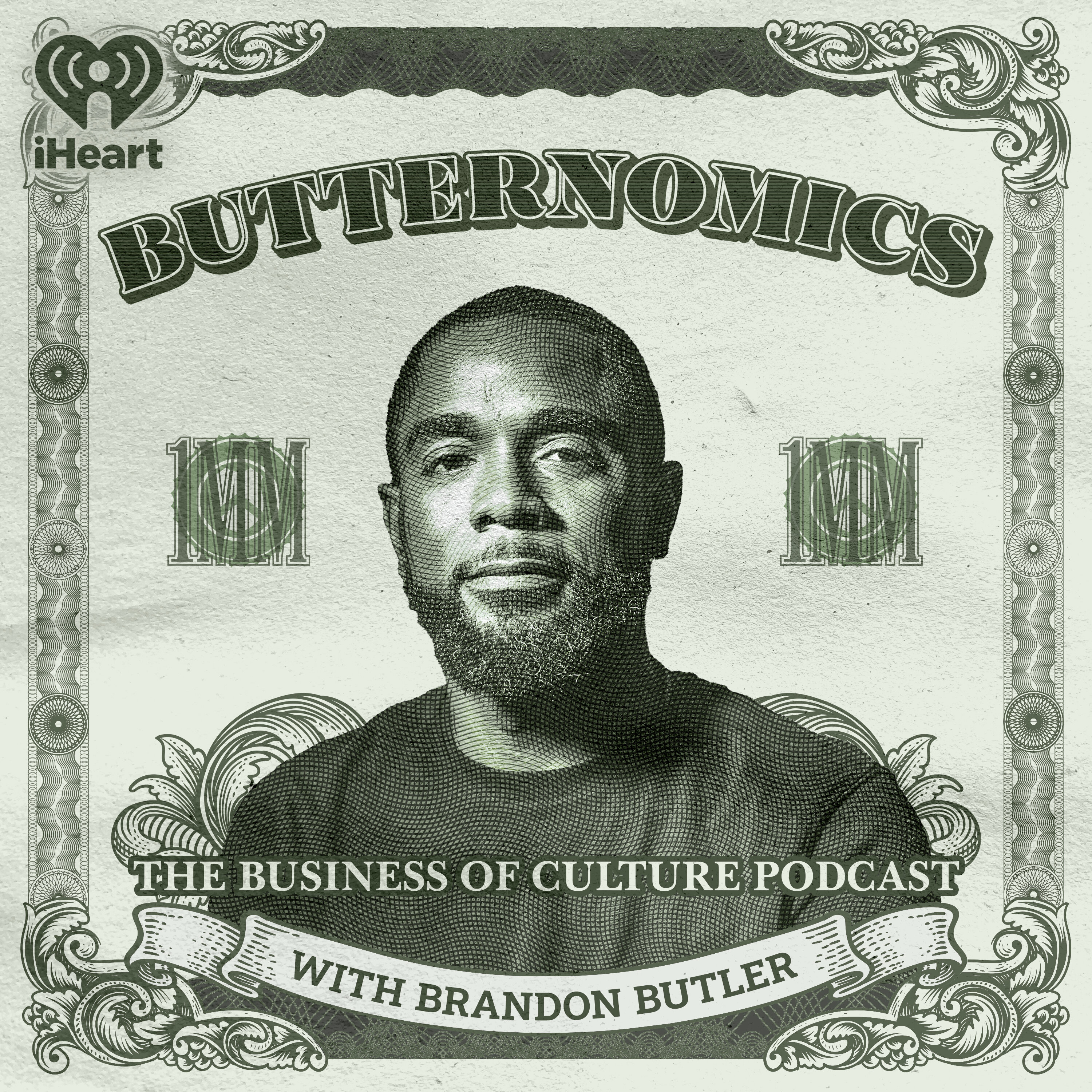
Butternomics Is What Happens When the Culture Decides to Explain Itself
Two days ago, Mandii B sat down with Brandon Butler and explained exactly why most Black podcasters are leaving money on the table. Her argument: a network deal isn't what you think it is. You're not getting a marketing budget, studio time, or a booking team.
Two days ago, Mandii B sat down with Brandon Butler and explained exactly why most Black podcasters are leaving money on the table. Her argument: a network deal isn't what you think it is. You're not getting a marketing budget, studio time, or a booking team. You're licensing your content so they can sell ads against it. The production costs, the editing, the guest booking: still on you. Meanwhile, her Patreon brings in a quarter million dollars a year by itself.
The episode is titled "The Real Podcast Money Blueprint, Owning Your IP, and Why Black Creators Have To Be 10x Better." It's the kind of conversation that makes you wonder why no one is saying this more loudly. But that's sort of the point of Butternomics.
What the Show Is
Butternomics: The Business of Culture is hosted by Brandon Butler, serial entrepreneur and CEO of Butter.ATL, an Atlanta-based creative and cultural enterprise he runs under the handle @mrsuperbran. Butler built Butter.ATL at the intersection of brand strategy and Black creative culture, and the podcast is an extension of that work, essentially turning his Rolodex and perspective into an audio series that publishes multiple times a week.
The show has been running for over 110 episodes on iHeartPodcasts. The throughline in every conversation is the same even when the topic looks completely different from the outside: culture and commerce are not separate conversations. They never have been. Butternomics is just honest about that.
The Episode Range Is the Point
If you tried to categorize this show by a single topic, you'd be doing it wrong. What makes Butternomics distinct is that it covers the full terrain of what it means to build something as a Black person in America (food, music, law, politics, real estate, art, tech) and keeps returning to the same questions underneath all of it: who owns this, who built it, and who's getting paid.
Here's a window into what that looks like in practice.
Rev. Jamal Bryant came on to break down the mechanics of the Target fast, in an episode titled "$12 Billion in 40 Days." He explained how 40 days of strategic economic pressure stripped $12 billion from Target's valuation, forced a 9.7% drop in foot traffic, and produced the first-ever HBCU business pipeline as a negotiated concession. His framing: "Boycotts without demands are just cancel culture in disguise." That's the kind of precision that distinguishes Butternomics from a basic commentary show.
Walter Johnson, the man behind Tendernism (the word that broke the internet), appeared in two recent episodes. He cooked for 50 years across 50 states before a camera ever found him. He started cutting wingtips off chicken in his brother's restaurant in Robbins, Illinois, worked casinos and backyard cookouts across the South, collecting techniques from everywhere he traveled, and then one video went viral. The quote that lands: "Ali shocked the world in '65. I shocked 'em in 2025." He's now building a seasoning line, planning a national food festival, and turning a lifetime of craft into a brand. Butternomics found him when the story was still unfolding.
Jai Ferrell holds the title of first Black woman CEO of the Girl Scouts of Greater Atlanta in over 100 years. She stepped into a $25 million operation with 125 employees, three properties, horses, and 2,000 acres of land. Before that, she was managing billion-dollar portfolios at the busiest airport in the world. The episode title sets the hook perfectly: "Jai Ferrell Runs a $25M Empire and You Think It's Just Cookies." The business lesson, about what it takes to lead at scale and what philanthropy actually reaches women and girls, goes well beyond the Girl Scouts brand.
Attorney Gerald Griggs came on to break down the economics of civil rights in Georgia. He dropped specific numbers: it costs $300,000 to $400,000 a year just to protect voting rights in the state. The SAVE Act would charge $33 to $130 for a voter ID. Georgia has the highest rate of people under state control in the country. And there are 2.2 million registered Black voters in Georgia; a governor's race takes 1.9 million to win. That last number alone is worth the listen.
Pastor Troy spent 25 years building an independent music career after watching Universal hand Nelly $5 million on a $90 million return. He signed, then left by choice, then built without them: his first independent album sold 60,000 to 70,000 copies at $8 each, radio jingles turned into a BMI royalty stream, and now he owns a vinyl store on Peter Street in Atlanta, runs his own streaming platform, and operates a TV network. Butler titled it "The Business Behind the Belt," but it's really a 25-year case study in what Black ownership looks like when someone actually commits to it.
Mali Wilson ran Tree Sound Studios in Atlanta for 15 years, taking over when it was $300,000 in debt and turning it into the room where Lil Wayne was loyal for a decade, where Drake, J. Cole, Big Sean, Wiz Khalifa, and 2 Chainz all came through before the world knew their names. She walked away from a deal with Clive Davis and has since built Earth Girl, a movement that has reached over 4,000 young women through camps, mentorship, and music industry education. Her episode is about what it looks like when someone who spent their whole career building for others finally builds for themselves.
Why Right Now
Butternomics is an Atlanta show in a very specific Atlanta moment. The World Cup is coming in 2026, and if the 1996 Olympics is any guide (Mayor Andre Dickens said it outright in his episode), Black entrepreneurs who aren't positioned before the world shows up will watch the money go somewhere else. The show is doing the work of making sure the community understands what programs exist, what loans are available, and what's at stake. Atlanta's Chief of Staff Courtney English came on to detail 20,000 units of affordable housing being built by 2030, a 34% drop in violent crime, and $5K to $10K micro-loans available through Showcase Atlanta ahead of the Cup.
That specificity, rooted in Atlanta and relevant nationally, is one of the things that sets Butternomics apart. The guests are operating in the same city, the same economy, the same moment as the people listening. It doesn't feel like a business podcast doing you a favor. It feels like the conversation already happening in the room where people are actually building.
Where to Start
These four episodes cover the widest range and require no back-catalog knowledge:
- "$12 Billion in 40 Days": Rev. Jamal Bryant on economic mobilization and what a boycott with demands actually looks like
- "Tendernism: The Untold Story": Walter Johnson on 50 years of craft going viral and what comes next
- "The Real Podcast Money Blueprint": Mandii B on IP ownership, Patreon strategy, and why you need to own your income streams before you talk to a network
- "Jai Ferrell Runs a $25M Empire and You Think It's Just Cookies": The actual business behind the Girl Scout cookie and what it means to lead a century-old institution
Butternomics is on iHeart and Apple Podcasts, and it's in the Black Podcast Directory at blackpodcastdirectory.com. It drops multiple times a week. Subscribe and stay current: the guest list keeps moving because the conversation doesn't stop.
Podcast news, creator spotlights & picks from the blackpodcastdirectory team — four times a year.