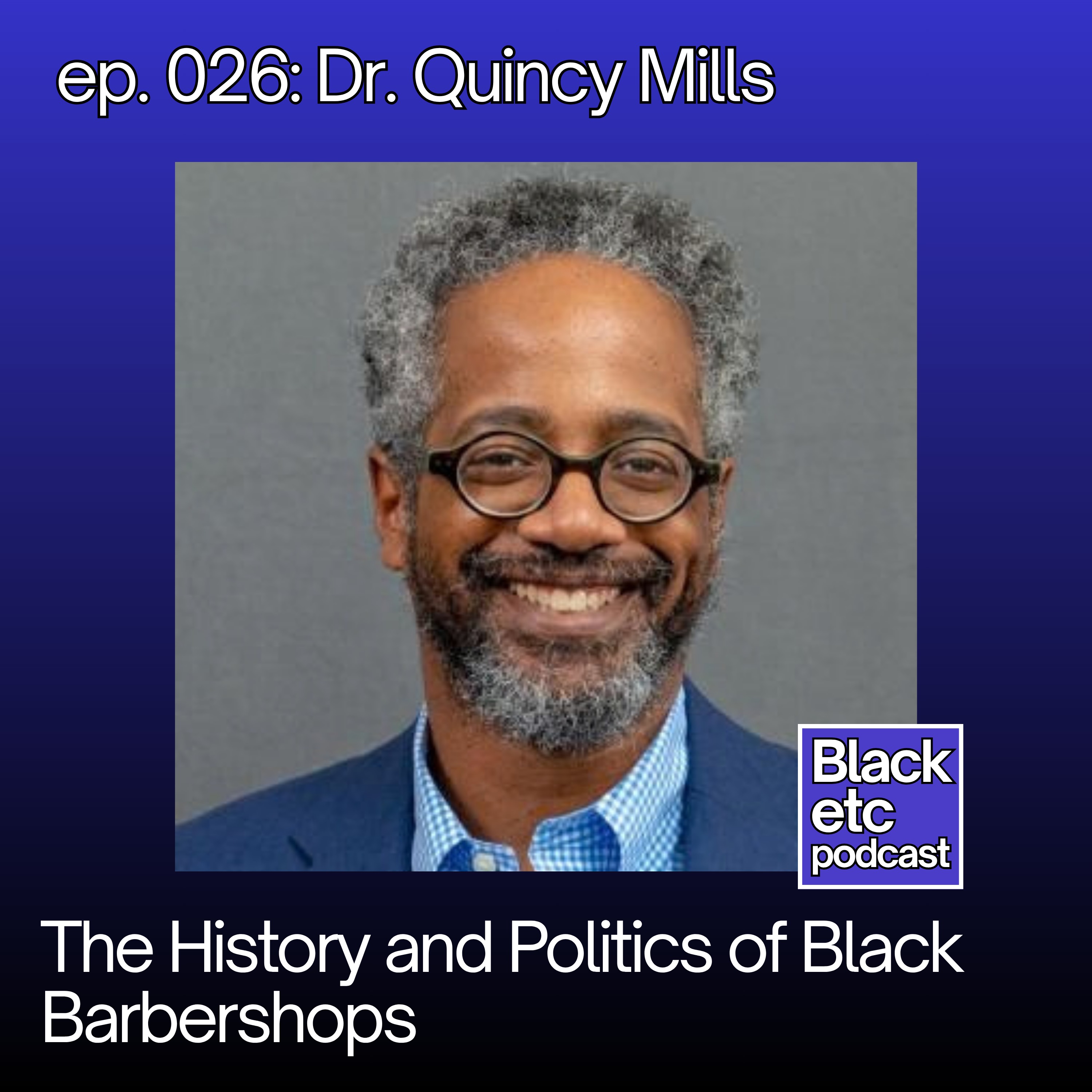
My guest for this episode is Dr. Quincy T.
Mills, who is an Associate Professor of History at the University of Maryland in addition to serving as the Associate Dean for Academic Affairs for Graduate Education in the College of Arts and Humanities and the Director of the Frederick Douglass Center for Leadership Through the Humanities. We first discuss the archival research and ethnography Dr.
Mills did in a Black barbershop on the Southside of Chicago to support both Dr. Melissa Harris-Perry's book on the subject and eventually his own.
We then get into the surprising history of wealth and prestige post-emancipation Black barbers accumulated as groomers of the White political and business elite before focusing on the shift toward the barbershops as working class Black spaces. We also explore the popular stereotype of Black barbershops as sites of unconventional (and outlandish) opinion and the role the spaces play in discussions of Black men's political thought.
Finally we look at the changing nature of Black barbershops and the extent to which they welcome various people in the community based on class, age, gender, and sexuality. Dr.
Quincy T. Mills' U of MD faculty page: Dr.
Mills' book: Cutting Along the Color Line: Black Barbers and Barber Shops in America Dr. Melissa Harris-Perry's book: Barbershops, Bibles, and BET: Everyday Talk and Black Political Thought Full episode notes here:
Podcast news, creator spotlights & picks
Comments (0)
No comments yet.